Myrtos Beach, Kefalonia: The Ultimate 2026 Deep-Dive Guide
From its electric-blue water and dramatic cliffs to the treacherous drive and 2026 safety warnings, here is everything you need to know about Greece's most iconic beach.
Published on 1 Aug 2026 21:37 GMT
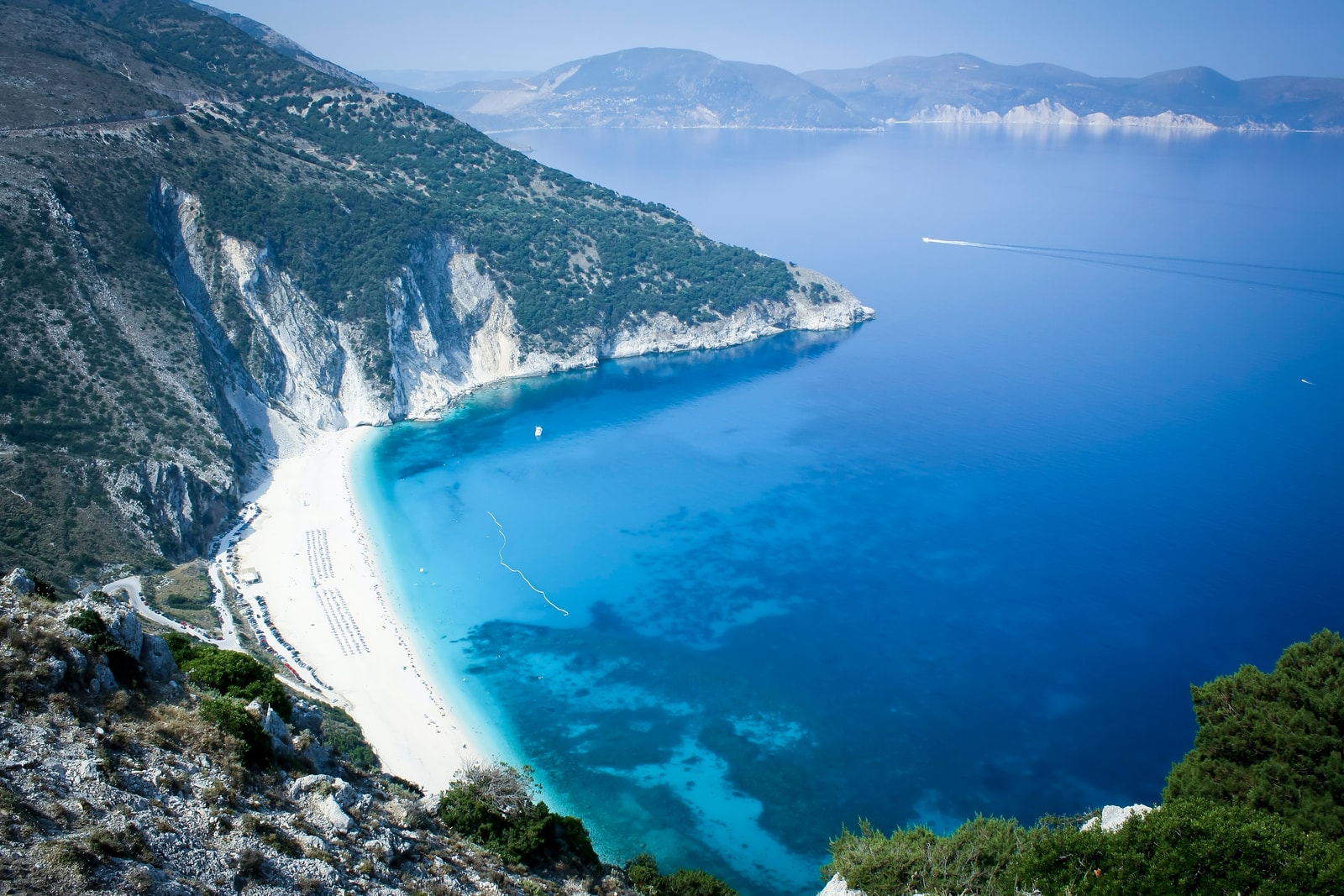
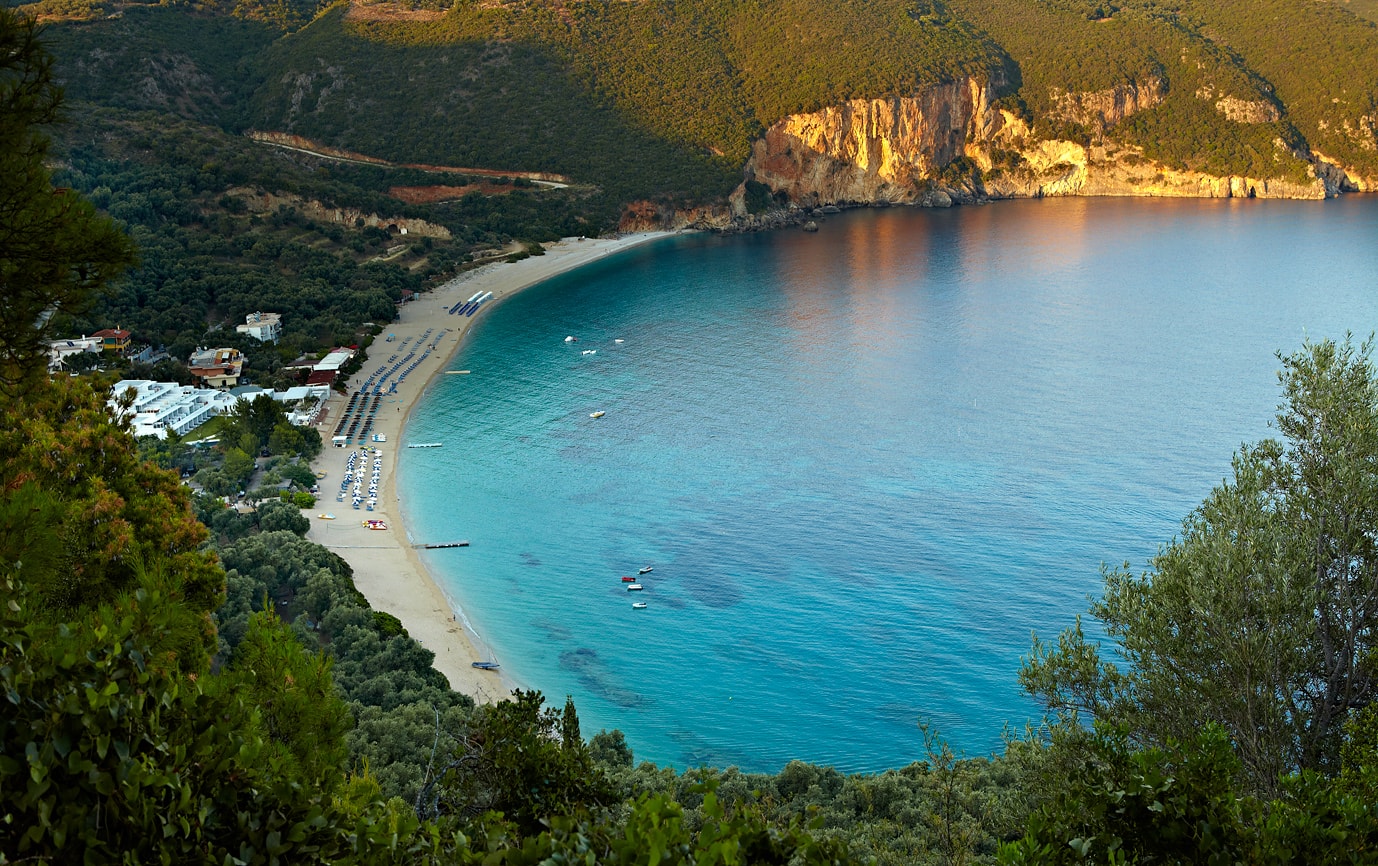
Nestled on the rugged northwestern coast of Kefalonia, Myrtos Beach is a semi-circular cove framed by the towering massifs of Agia Dynati and Kalon Oros. Its legendary beauty isn't a trick of photography but a spectacular natural phenomenon.
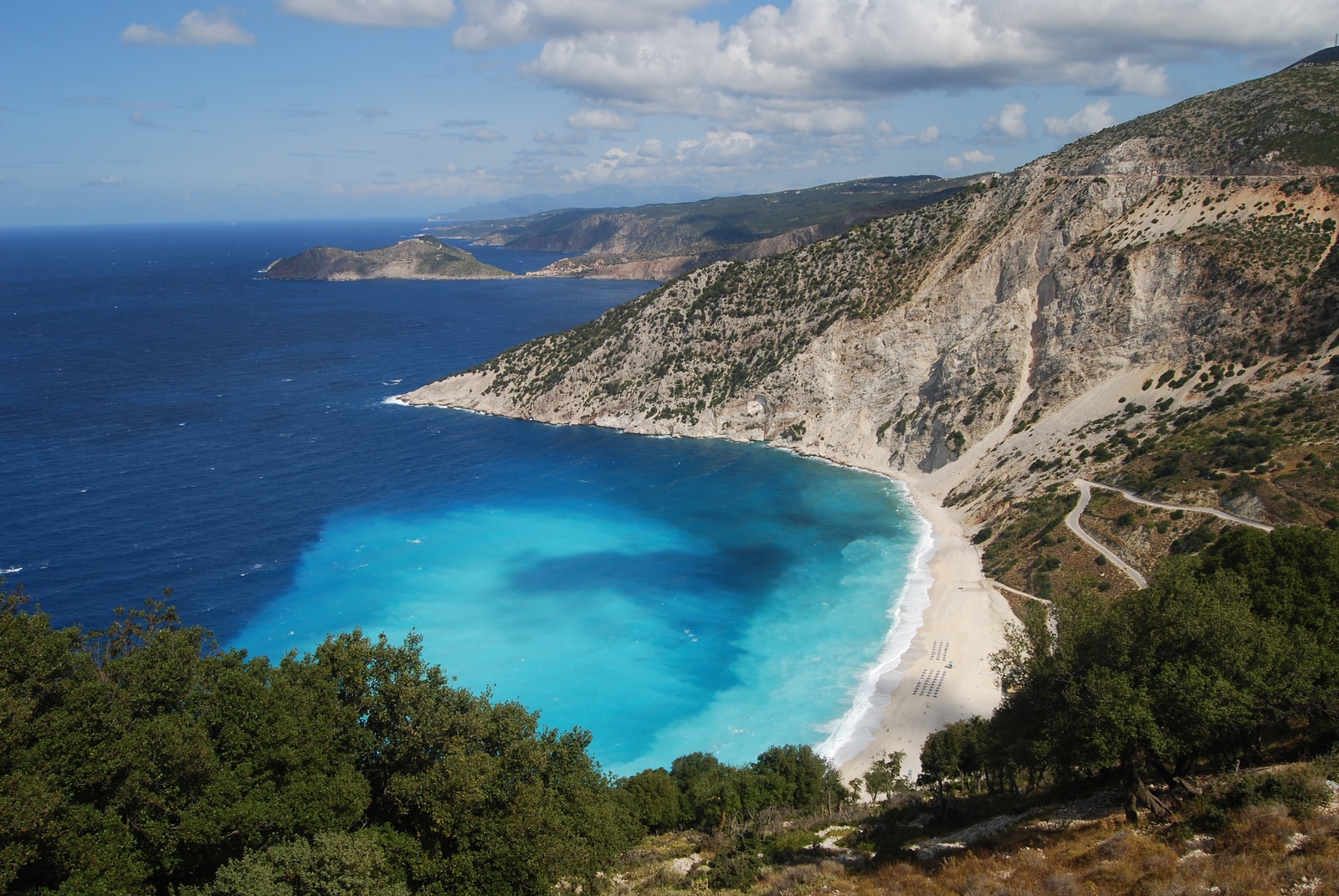
The glowing, opaque turquoise hue is a result of geology in action. The open bay is battered by strong Ionian Sea waves, which act like a giant mortar and pestle, grinding the white limestone cliffs into a fine powder. This sediment gets suspended in the water, scattering sunlight to create the famous "milky-blue" effect.
Under the Greek government's "Untrodden Beaches" initiative, Myrtos is protected as a Natura 2000 site. This means commercial development is heavily restricted. While limited sunbed rentals (€10 to €15) may be available in monitored pockets, visitors should plan for a rustic, pack-in-pack-out experience. No permanent beach bars are allowed on the shore.
The shoreline itself is made of smooth, rounded white marble pebbles that can get very hot. On the far eastern end of the beach, you can find several deep, cool limestone sea caves carved out by coastal erosion, offering a welcome escape from the midday sun.
How to Drive the Serpentine Road to the Beach
Reaching Myrtos is an adventure in itself, requiring a careful drive down a narrow, 2.5-kilometer serpentine road from the village of Divarata. The road features a steep 15% gradient and a series of sharp, blind hairpin turns carved directly into the 300-meter cliff face.
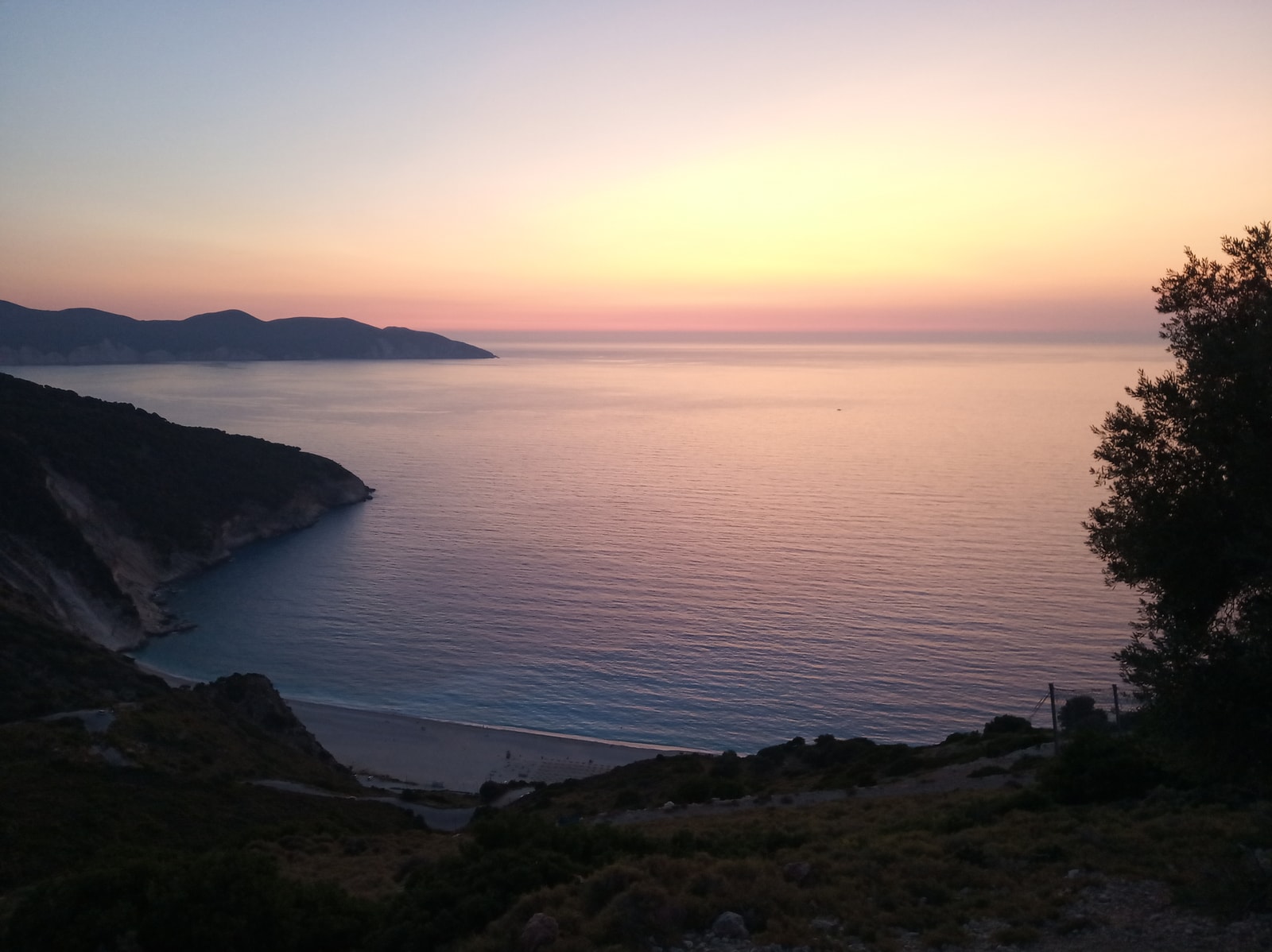
When driving, use your engine to brake by staying in 1st or 2nd gear on the descent to avoid overheating your brakes. Always yield to vehicles traveling uphill, as they need momentum to climb the steep curves. Be aware of Kefalonia's wild mountain goats, which often stand motionless around blind corners.
A free but limited gravel parking lot is available at the base, but it fills up by 9:30 AM in summer. Afterwards, drivers must park along the steep access road. If you park on the incline, pull the handbrake, leave the car in gear, and turn your front tires toward the cliff wall for safety.
Public buses operated by KTEL Kefalonia typically drop passengers at the junction in Divarata, leaving a 2.5-kilometer walk down to the beach. Check schedules for seasonal routes that may offer a direct descent.
Best Views, Sunsets, and Paragliding
The dramatic landscape of Myrtos is best appreciated from above. The classic "postcard" view can be found at the Northern Viewpoint, located a few kilometers north of the beach turnoff on the road to Assos.
For a view that captures the winding road against the turquoise sea, stop at the Southern Viewpoint on the approach from Divarata.
Facing west, Myrtos is also a world-class sunset destination. During the golden hour, the setting sun illuminates the white cliffs, turning them glowing shades of orange and gold. For photographers, the blue hour after sunset offers deep pastel hues, perfect for long-exposure shots of the waves.
For a true adrenaline rush, several certified local operators offer tandem paragliding flights. Gliders launch from the high ridges of Mount Agia Dynati and soar over the bay before landing gently on the pebble shore. Flights are weather-dependent, so it is best to book in advance.
Day Trips From Myrtos Beach
Myrtos serves as a perfect anchor for exploring the other gems of northern Kefalonia, many of which retain their stunning pre-earthquake architecture.
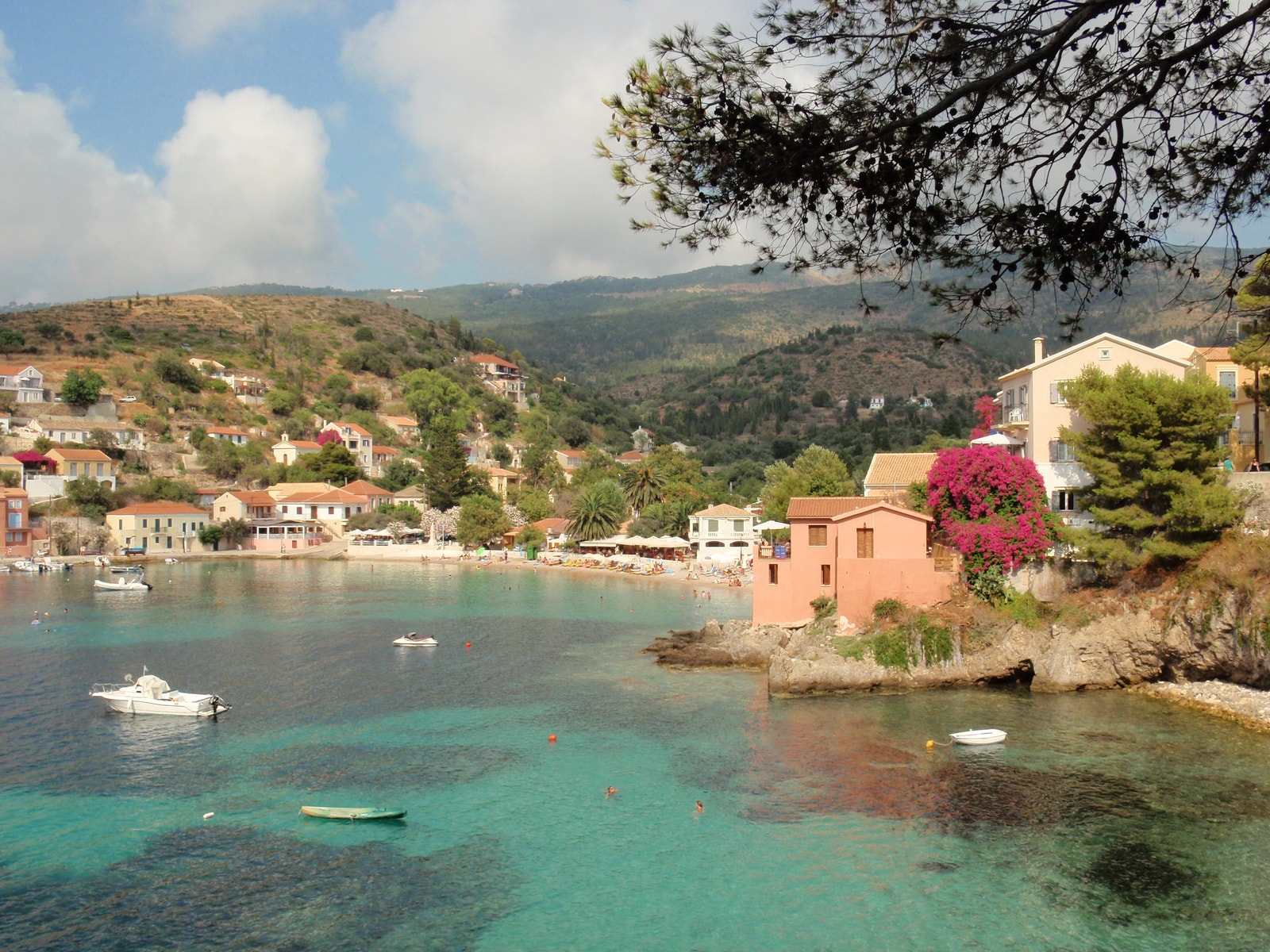
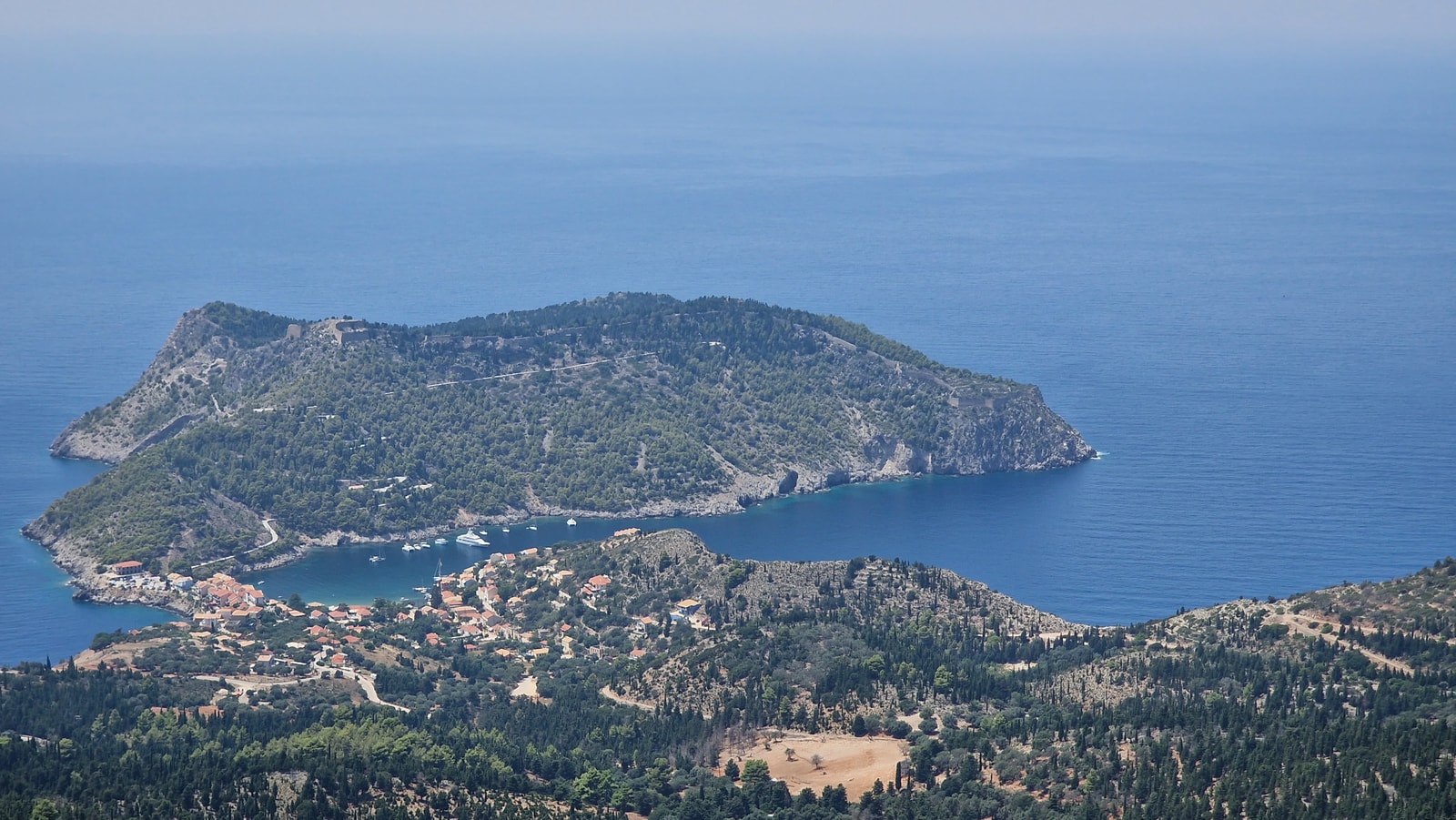
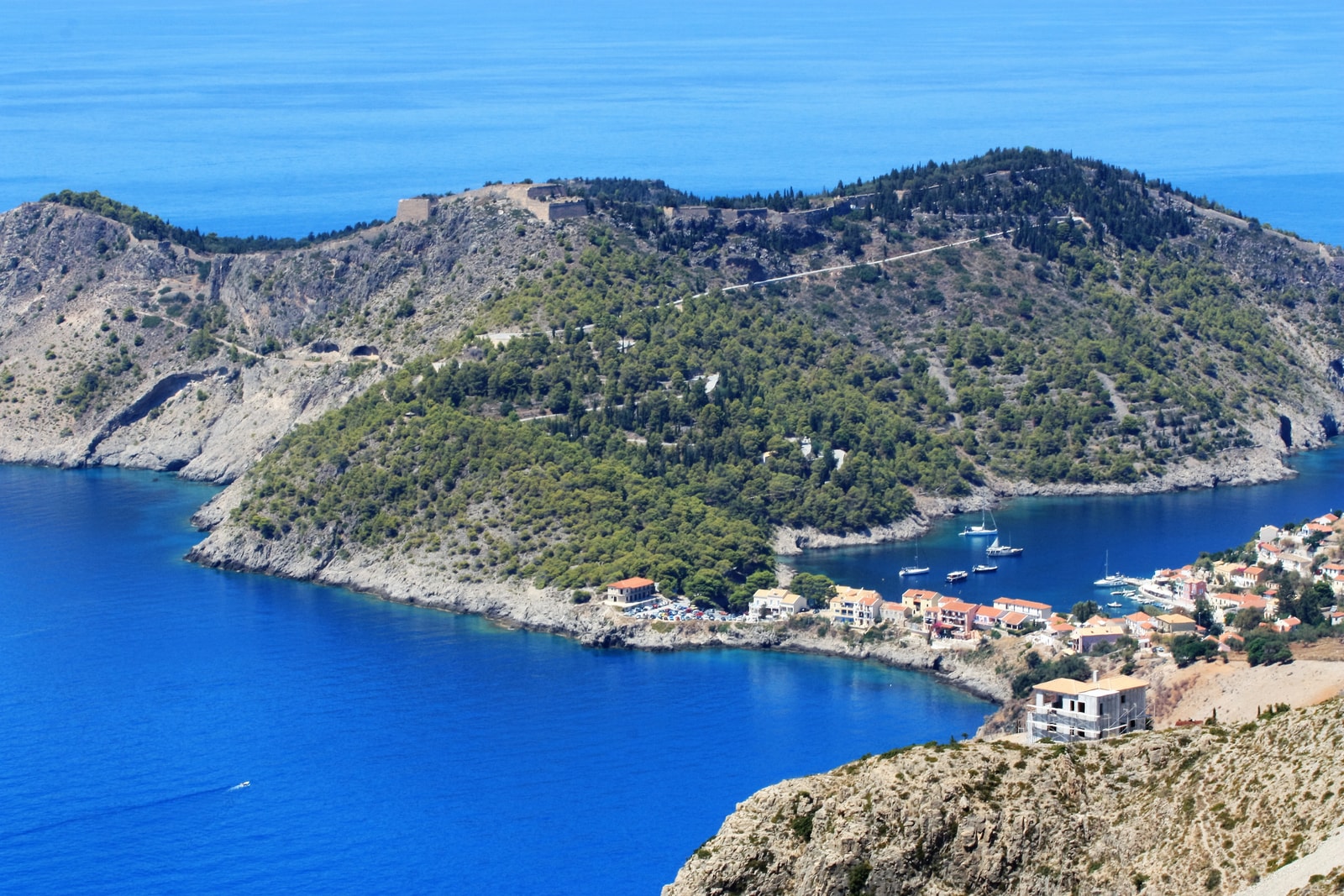
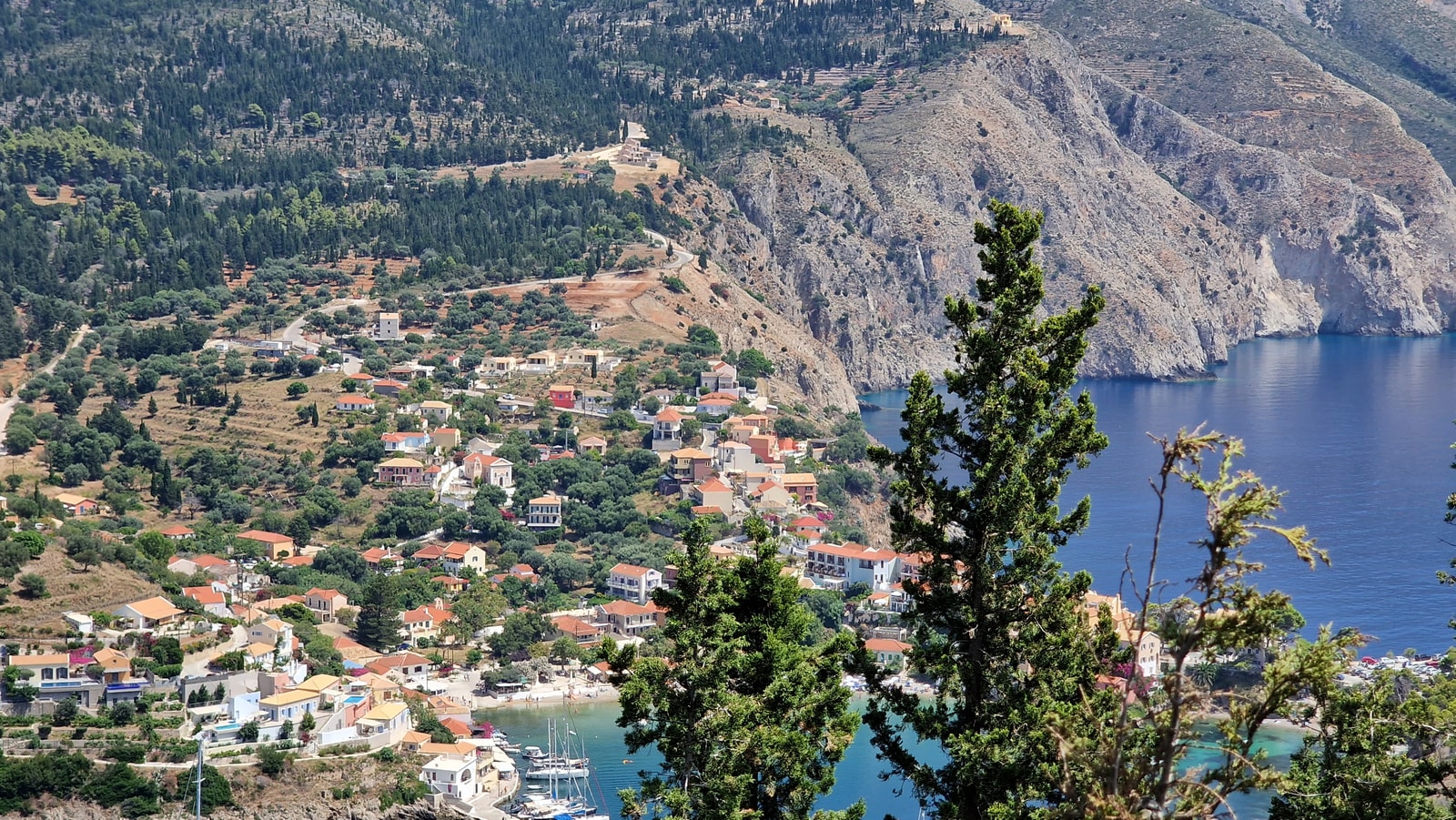
Assos Village, just 20 minutes north, is a romantic, Venetian-style settlement on a narrow peninsula. Its pastel-painted houses tumble down a hillside to a sheltered bay. A 2-kilometer path leads up to the ruins of a massive 16th-century Venetian castle, offering panoramic coastal views.
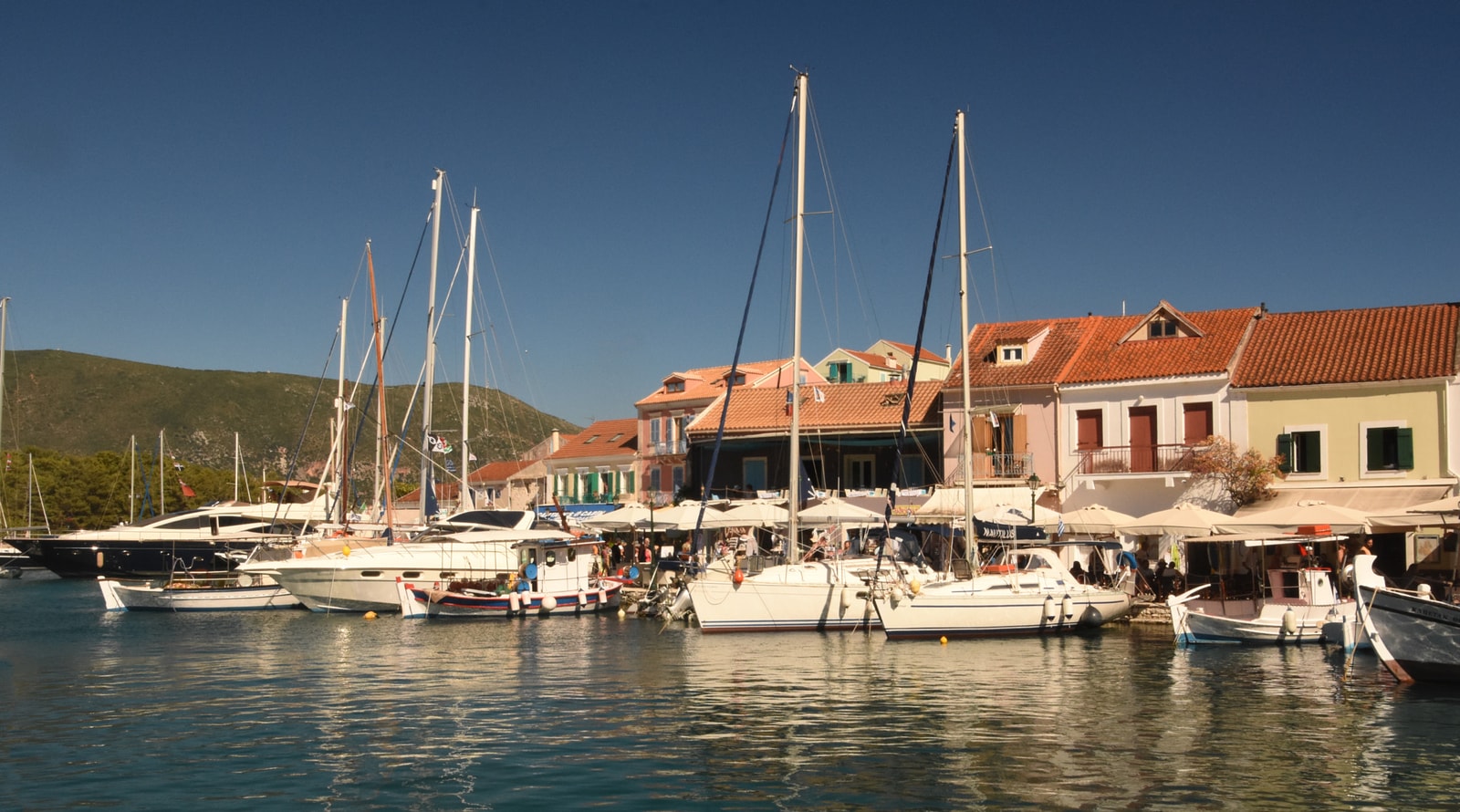
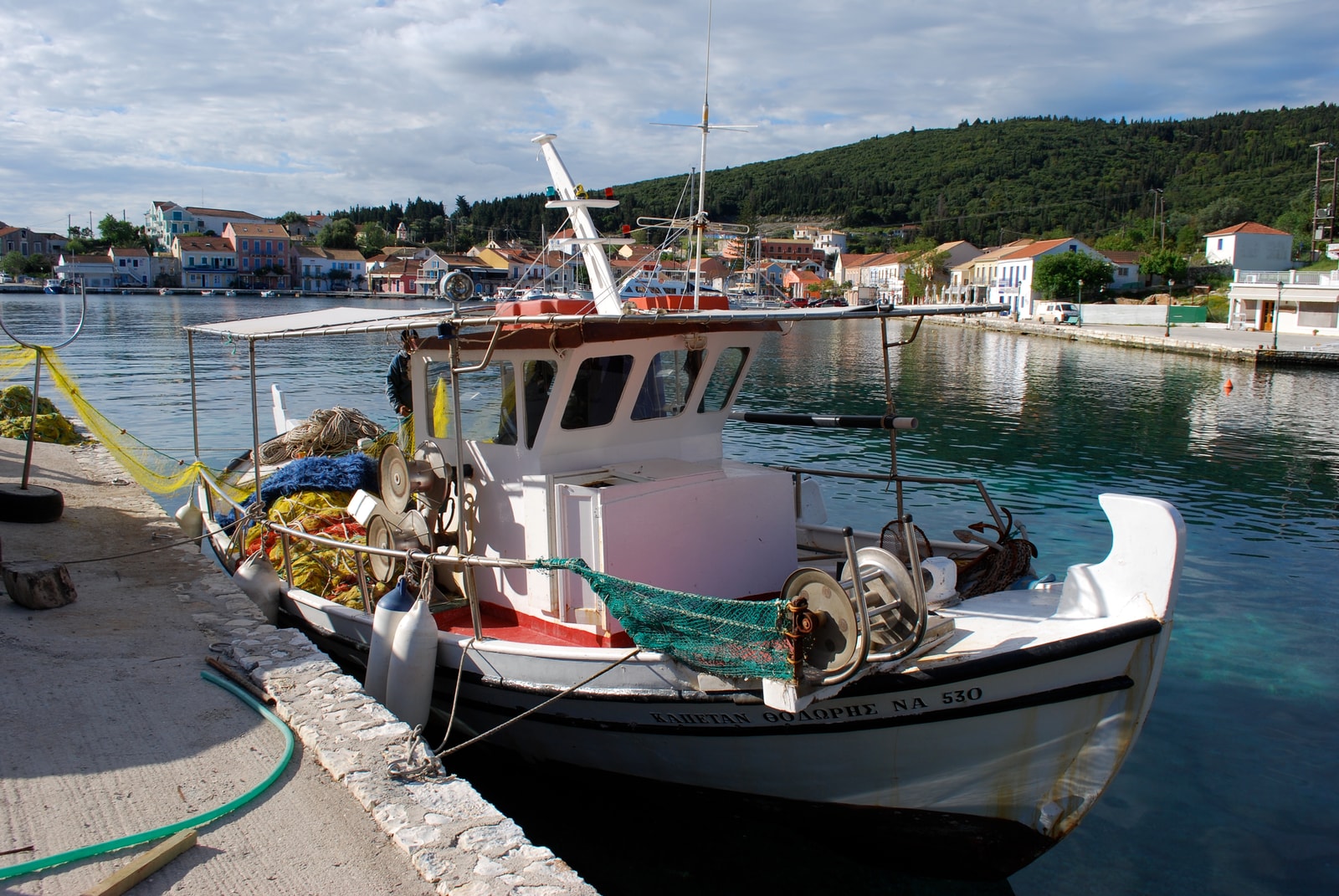
Fiskardo, about 50 minutes north, is an upscale harbor town often called the "St. Tropez of Greece." Spared by the 1953 earthquake, it is the only village that preserves its original 18th-century Venetian architecture, with premium seafood restaurants lining the yacht-filled waterfront.
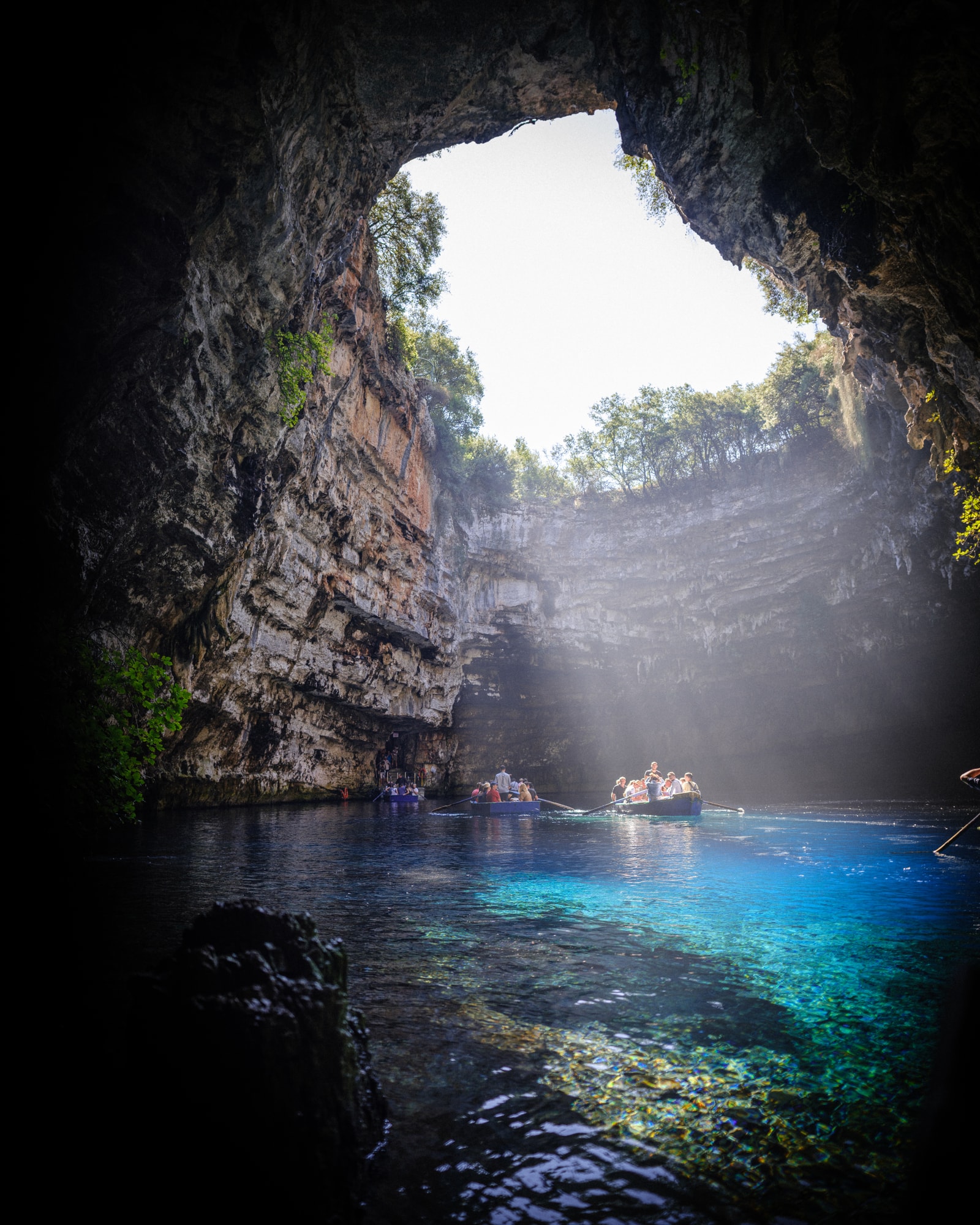
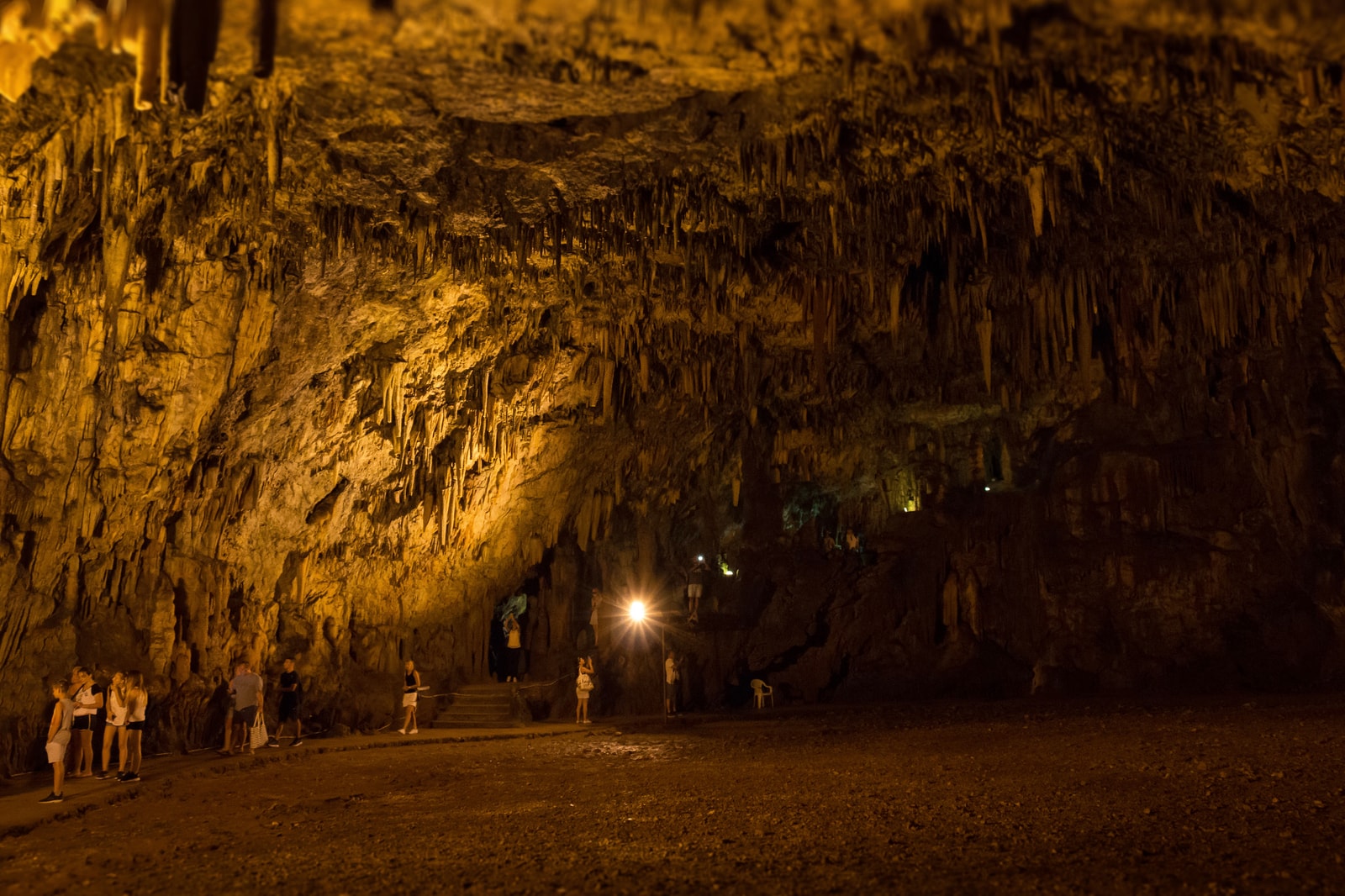
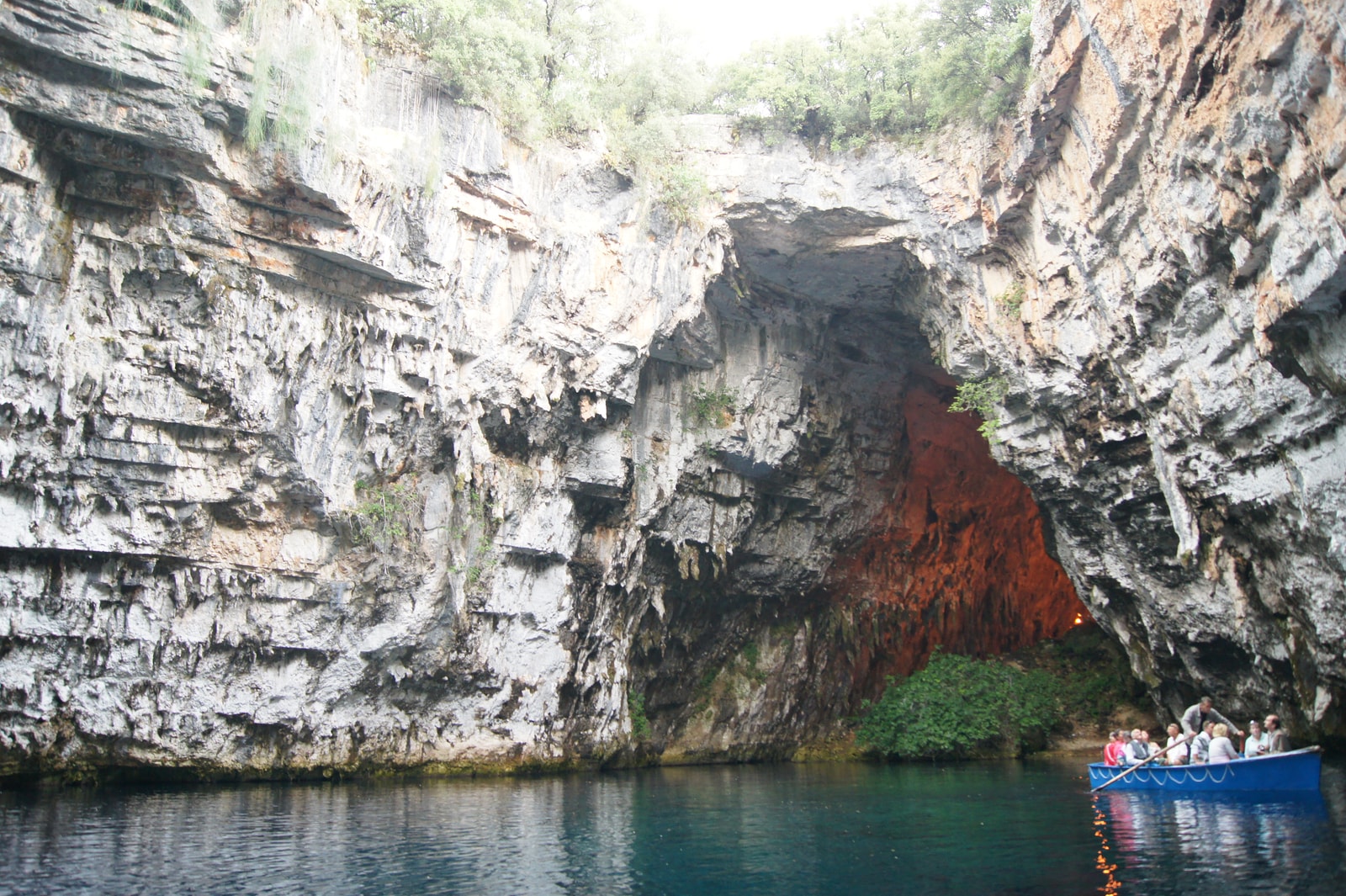
Southeast of Myrtos, near Sami, you'll find two incredible geological wonders. Melissani Cave Lake is a collapsed sea cave where sunlight streams in, making the rowboats on the crystal-clear water appear to float in mid-air. Nearby, the 150-million-year-old Drogarati Cave features a massive chamber with superb natural acoustics and ancient stalactites.
Kefalonia's Summer 2026 Events Calendar
If you're visiting from August 2026 onward, the area around Myrtos comes alive with a vibrant calendar of traditional feasts (panigiria), cultural festivals, and maritime celebrations.
Here are some key events to mark on your calendar:
- Saristra Festival (Late July – Early August 2026): An acclaimed alternative arts and music festival held in the ruins of Palia Vlachata, a ghost village near Sami. Expect indie music, art installations, and open-air cinema.
- Feast of the Saviour (August 6, 2026): A traditional village feast in Agia Efimia, with live Greek music, dancing, and local food filling the main square.
- Swim the Strait: Ithaca to Kefalonia (August 7–14, 2026): An open-water swimming event where athletes cross the channel from Ithaca to Kefalonia, with festivities along the Sami waterfront.
- Dormition of the Virgin Mary & International Varkarola (August 15, 2026): A major summer celebration. In the evening, the harbor of Assos hosts the Varkarola, where choirs sing from lantern-lit boats, followed by a fireworks display.
- Panagia Agrillion Festival (August 23, 2026): An authentic local panigiri at the scenic Agrilia Monastery overlooking Sami, with traditional music, dancing, and food.
- Fiskardo Village Feast (September 8, 2026): This maritime-themed celebration in Fiskardo harbor features folk dancing and food stalls set among the luxury yachts.
Gallery
Additional Resources
- Official Website of the Municipality of Sami
- Kefalonia Tourism Board Guide to Agrilia Monastery
- Location of Myrtos Beach (Google Maps)
- Location of Divarata (Google Maps)
- Location of Assos Village and Castle (Google Maps)
- Location of Fiskardo Harbor (Google Maps)
- Location of Melissani Cave Lake (Google Maps)
- Location of Drogarati Cave (Google Maps)
- Location of Palia Vlachata (Google Maps)
- Location of Agia Efimia (Google Maps)