Catania Beaches 2026: Your Guide to Sicily's Volcanic and Golden Coasts
From the black sands of San Giovanni Li Cuti to the bustling lidos of La Playa, discover the best beaches near Catania this summer, shaped by the legendary Mount Etna.
Published on 27 Jul 2026 14:48 GMT
Shaped by millennia of eruptions from Mount Etna, the coastline around Catania offers a study in contrasts. To the south, vast stretches of golden sand create a classic resort atmosphere. To the north, the coast transforms into a jagged volcanic landscape of black sand, dark pebbles, and dramatic sea stacks.
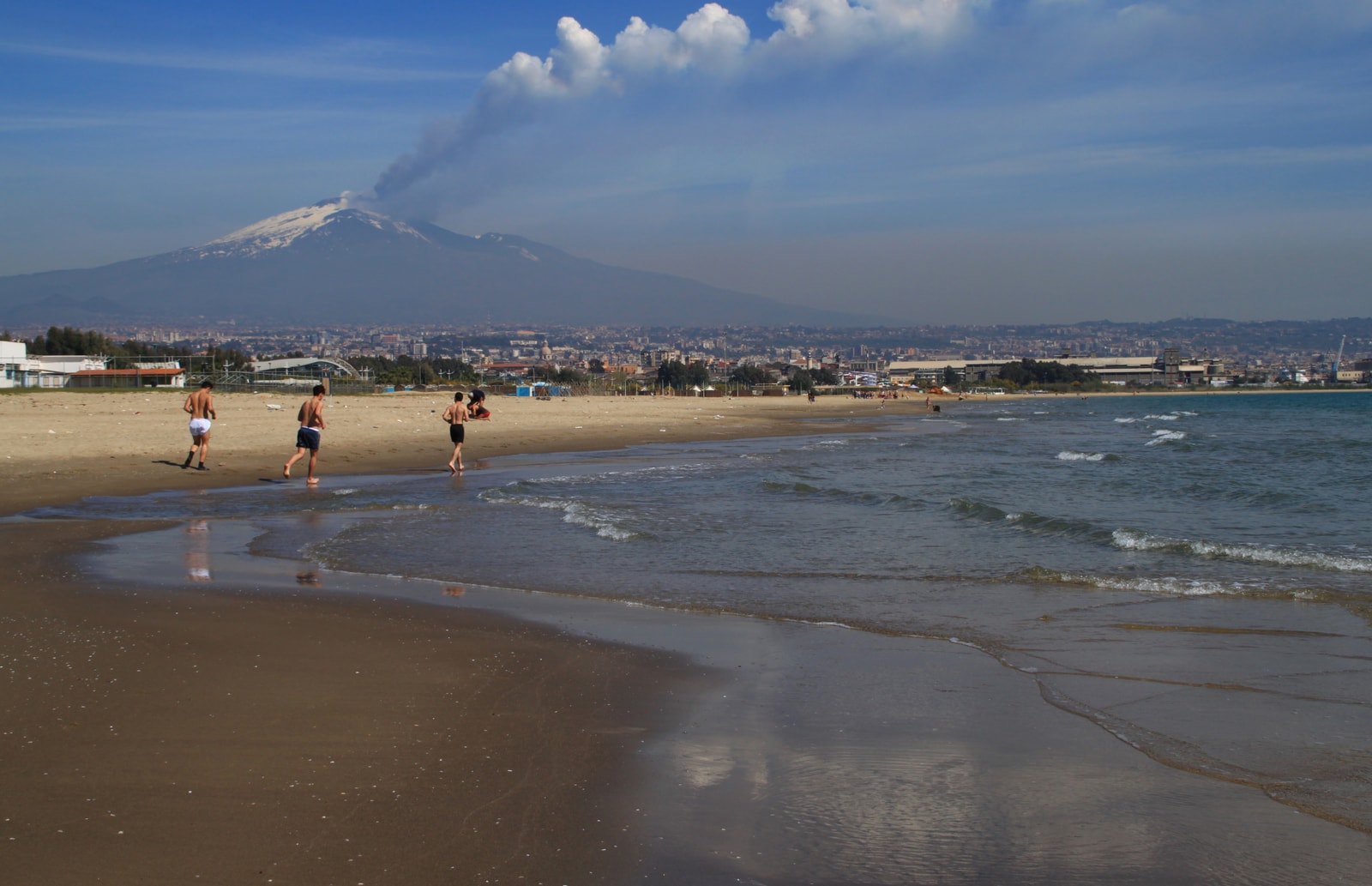
For travelers, navigating this diverse landscape begins in the city. Key transport hubs like Catania Central Station for trains and Piazza Borsellino for local buses are the starting points for any coastal adventure.
San Giovanni Li Cuti: The City's Volcanic Beach
Just north of the city center lies San Giovanni Li Cuti, a traditional fishing village and Catania's most iconic urban beach. It’s a striking introduction to the region's volcanic geology, with black sand and large, smooth basalt boulders known locally as cuti.
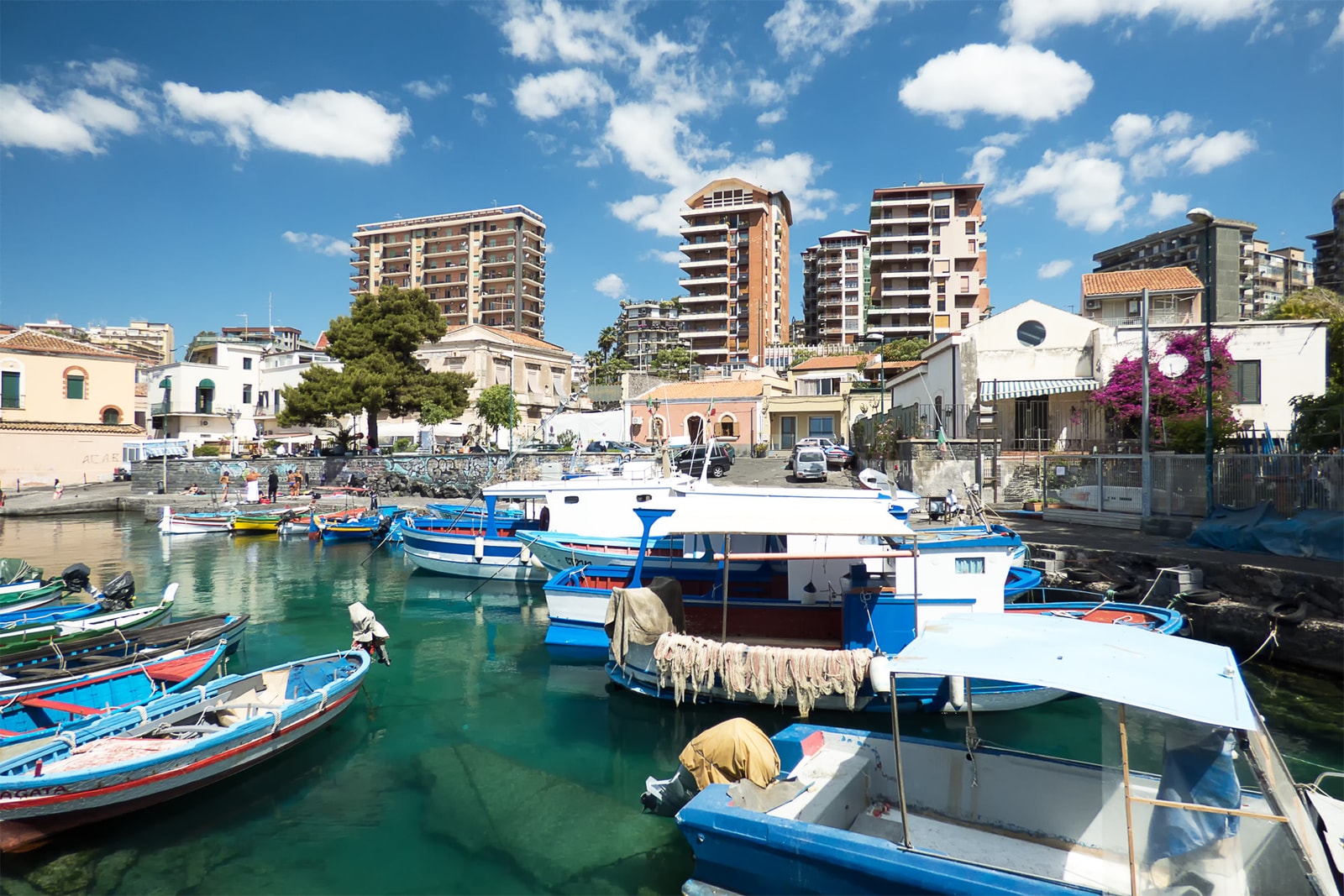
During summer, large wooden platforms called solariums are built over the rocks, providing comfortable sunbathing spots with ladders leading directly into the deep, clear water. Be warned: the black sand gets extremely hot, so water shoes are mandatory. The village also boasts a vibrant food scene, perfect for a seafood dinner or a traditional Sicilian breakfast of granita and brioche col tuppo.
Getting there is easy. It's a 30-minute walk along the waterfront promenade from central Catania, or a short trip via the Galatea or Italia metro stations. Local buses like the 530 or 935 also serve the area.
La Playa di Catania: Golden Sands and Lido Life
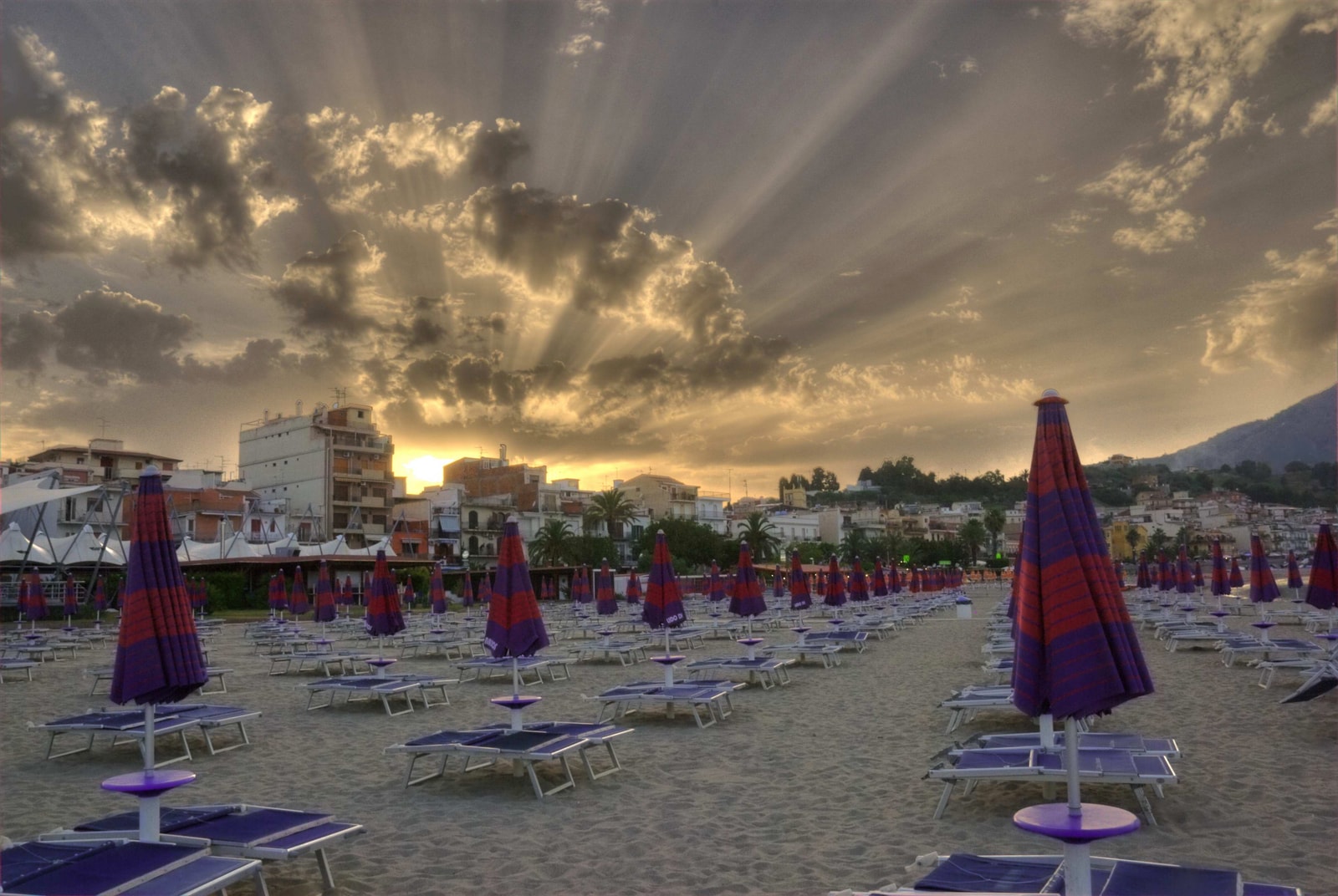
Stretching for 18 kilometers south of the port, La Playa is Catania's premier sandy beach. The coastline is divided into private beach clubs, called lidi, and public free beaches, or spiagge libere. The lidi offer rows of umbrellas and sunbeds, restaurants, and sports facilities.
Interspersed between them are three municipal free beaches (Spiaggia Libera 1, 2, and 3), which offer public showers and lifeguard coverage. In 2026, the Mare per Tutti 2026 project ensures these free areas are fully accessible for visitors with disabilities.
The lidos cater to different crowds:
- Lido Azzurro: A family-oriented institution with a classic, retro Italian Riviera feel.
- Lido Verde: Known for its excellent on-site restaurant and sunset dining.
- Lido Le Capannine: Attracts a younger, high-energy crowd with a focus on sports by day and parties by night.
- Lido Cucaracha: Famous for its vibrant Latin and Caribbean-themed dance events.
After sunset, many lidos transform into open-air discotheques on the sand. The dedicated Line D bus runs frequently from the city center, making it the easiest way to reach the beach.
Riviera dei Ciclopi: Where Myth Meets the Sea
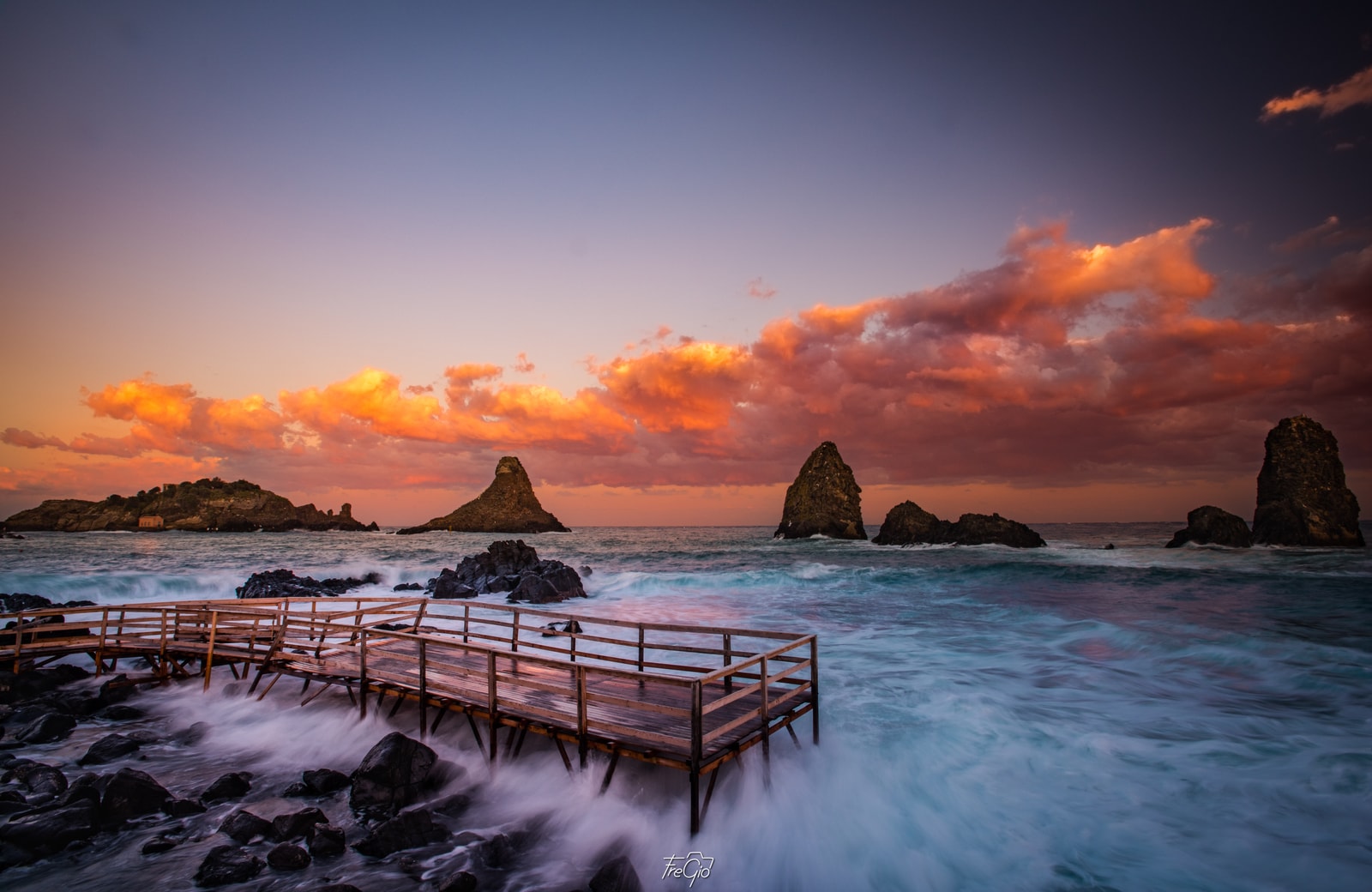
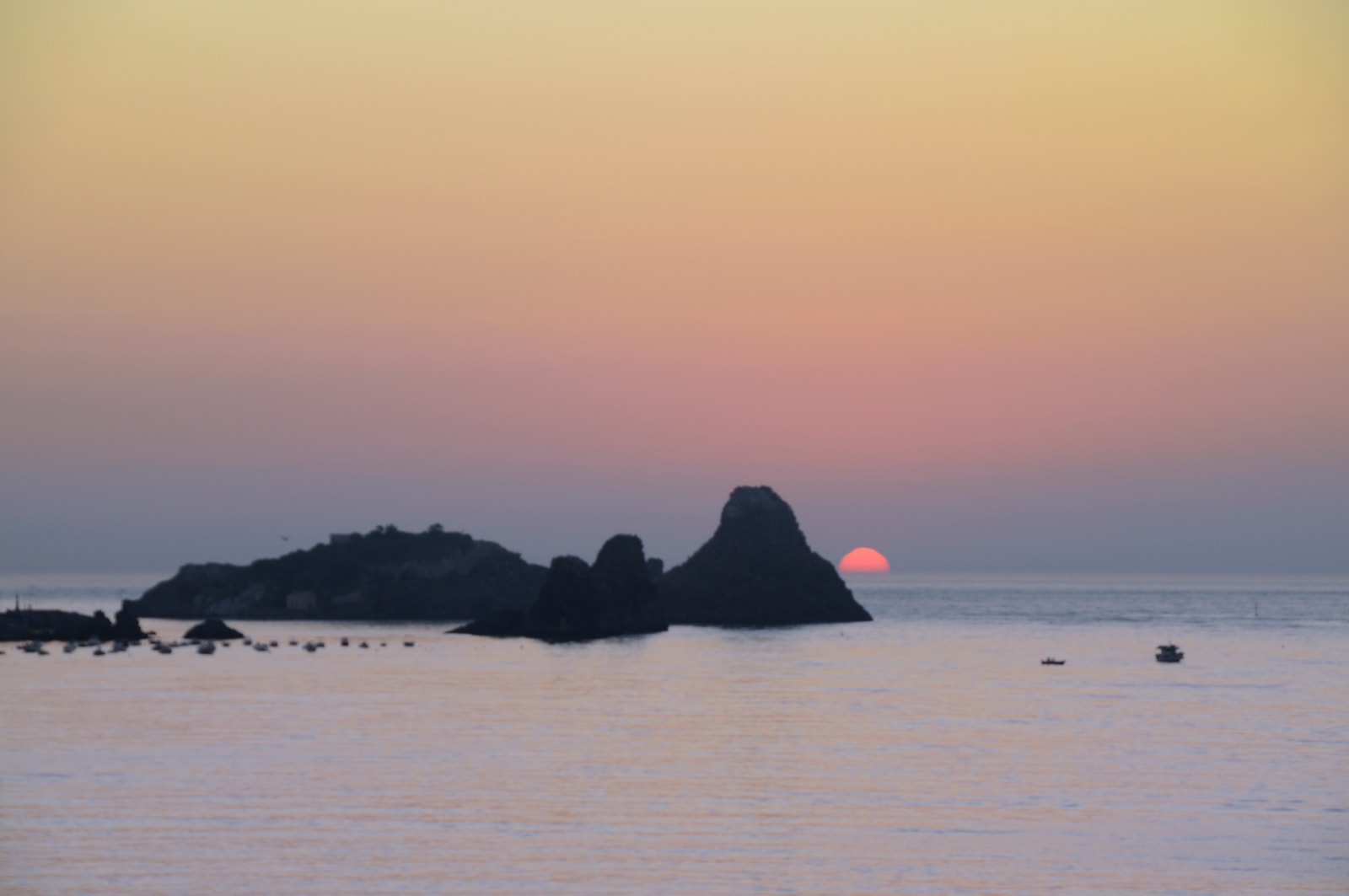
North of Catania, the Riviera dei Ciclopi is a legendary coastline centered around the towns of Aci Castello and Aci Trezza. Its dramatic landscape was forged by submarine volcanic eruptions 500,000 years ago.
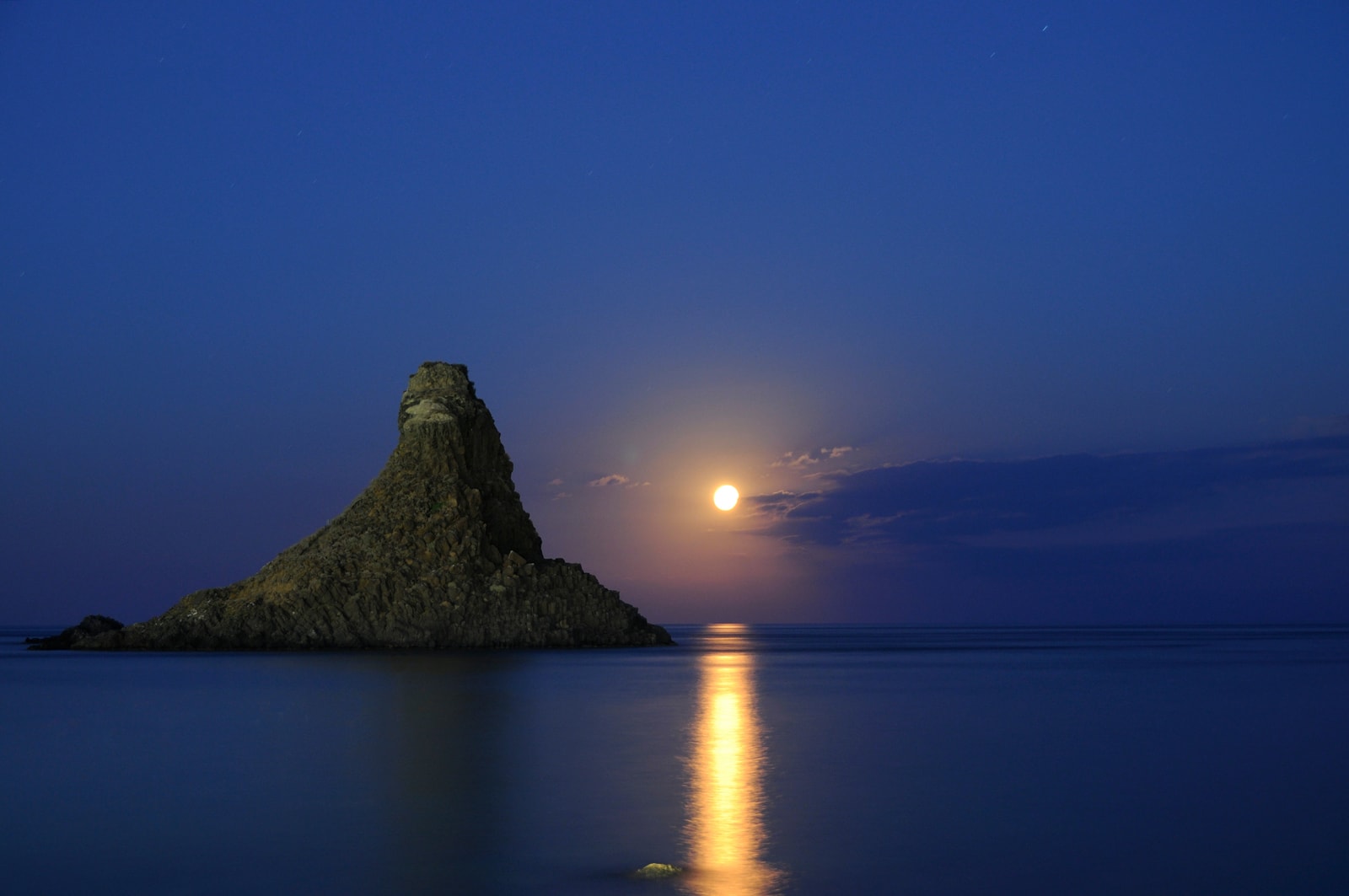
The most famous features are the Faraglioni of Aci Trezza, towering basalt sea stacks that rise from the water. According to Greek myth, these are the boulders the Cyclops Polyphemus threw at Odysseus's ship.
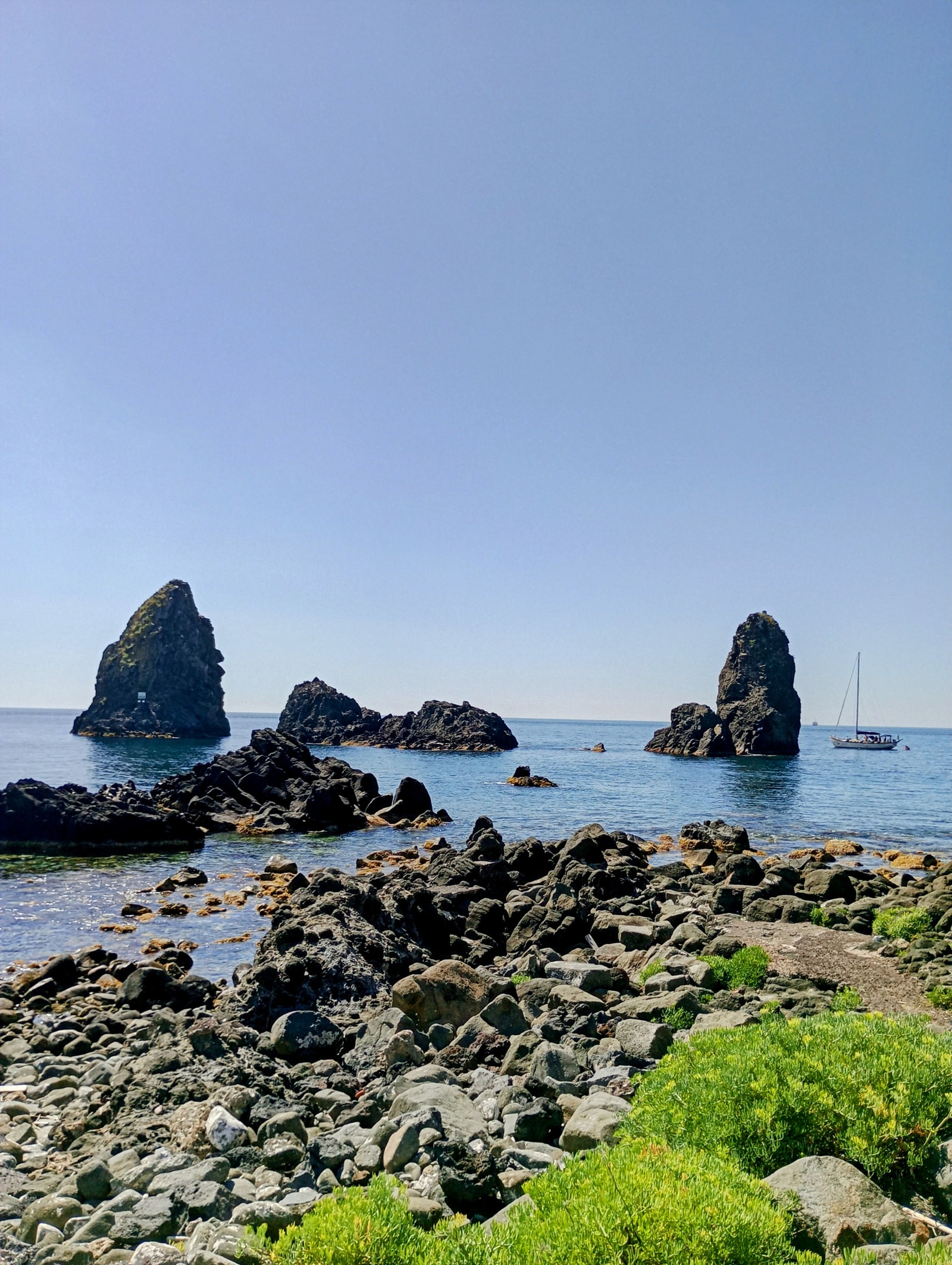
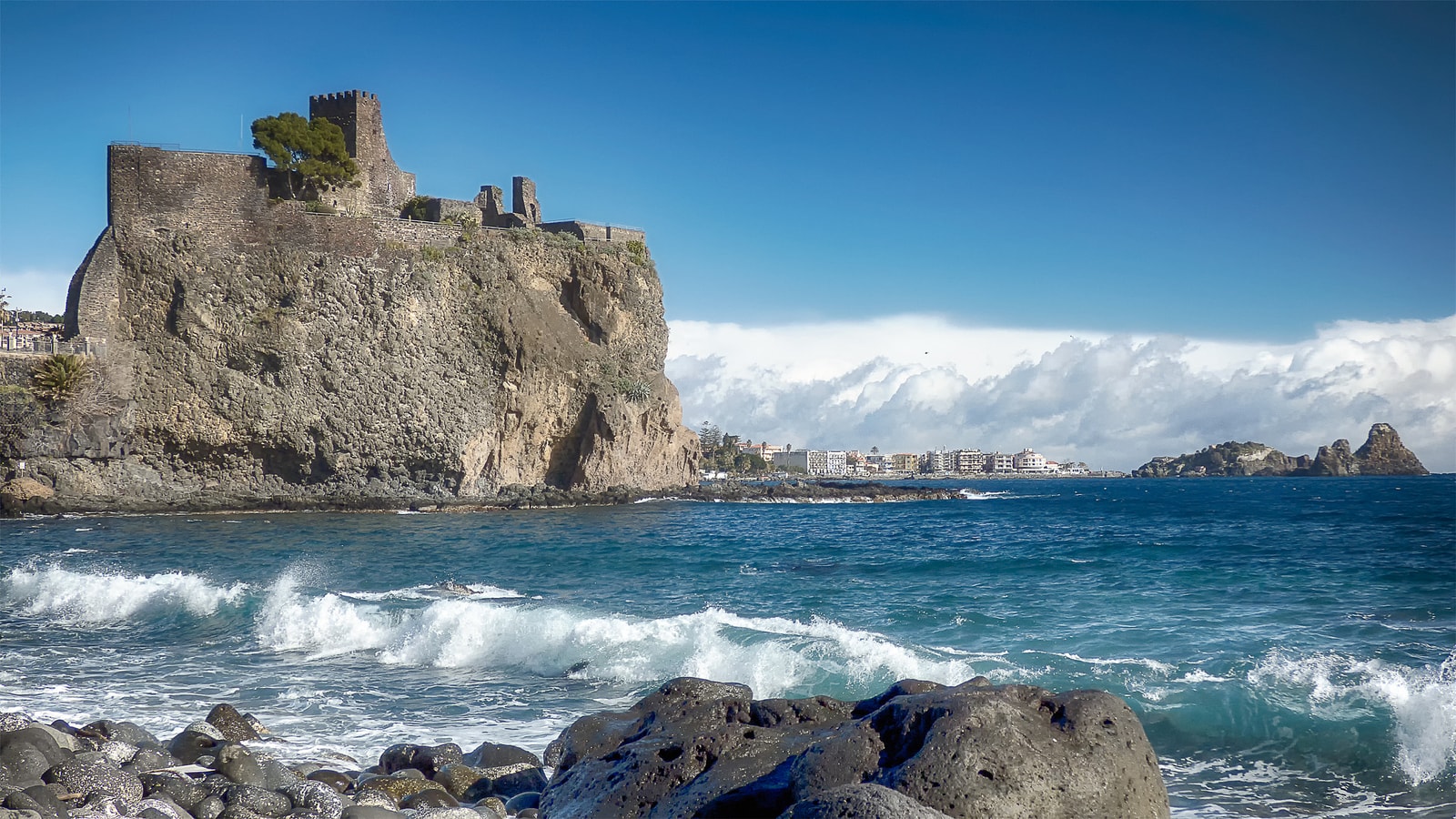
In Aci Castello, the striking 11th-century Norman Castle sits atop a massive lava outcrop. The waters here are part of the Isole Ciclopi Marine Protected Area, an ecological reserve managed by the University of Catania that includes Isola Lachea. With no sand, summer swimming relies on wooden solariums built over the rocks. Bus 534 from Catania is the best way to visit.
Santa Maria la Scala: A Hidden Pebble Cove
Tucked beneath the baroque town of Acireale is Santa Maria la Scala, a historic fishing hamlet. It sits at the base of the La Timpa Nature Reserve (Riserva Naturale Orientata La Timpa), a towering volcanic cliff covered in lush Mediterranean flora.
To reach the village on foot, you descend Le Chiazzette, a stunning 17th-century cobblestone path with switchbacks offering breathtaking views. The path passes the Fortezza del Tocco, a 16th-century Spanish bastion built to defend against pirates.
The beach itself is made of smooth, rounded black volcanic pebbles called covoli. The water is crystal-clear, and a cold freshwater spring flowing from Etna creates refreshing cool spots along the shore. The easiest access is by taking a regional train to Acireale and then embarking on the steep 30-minute walk down the historic path.
Isola Bella & Giardini Naxos: A Perfect Day Trip
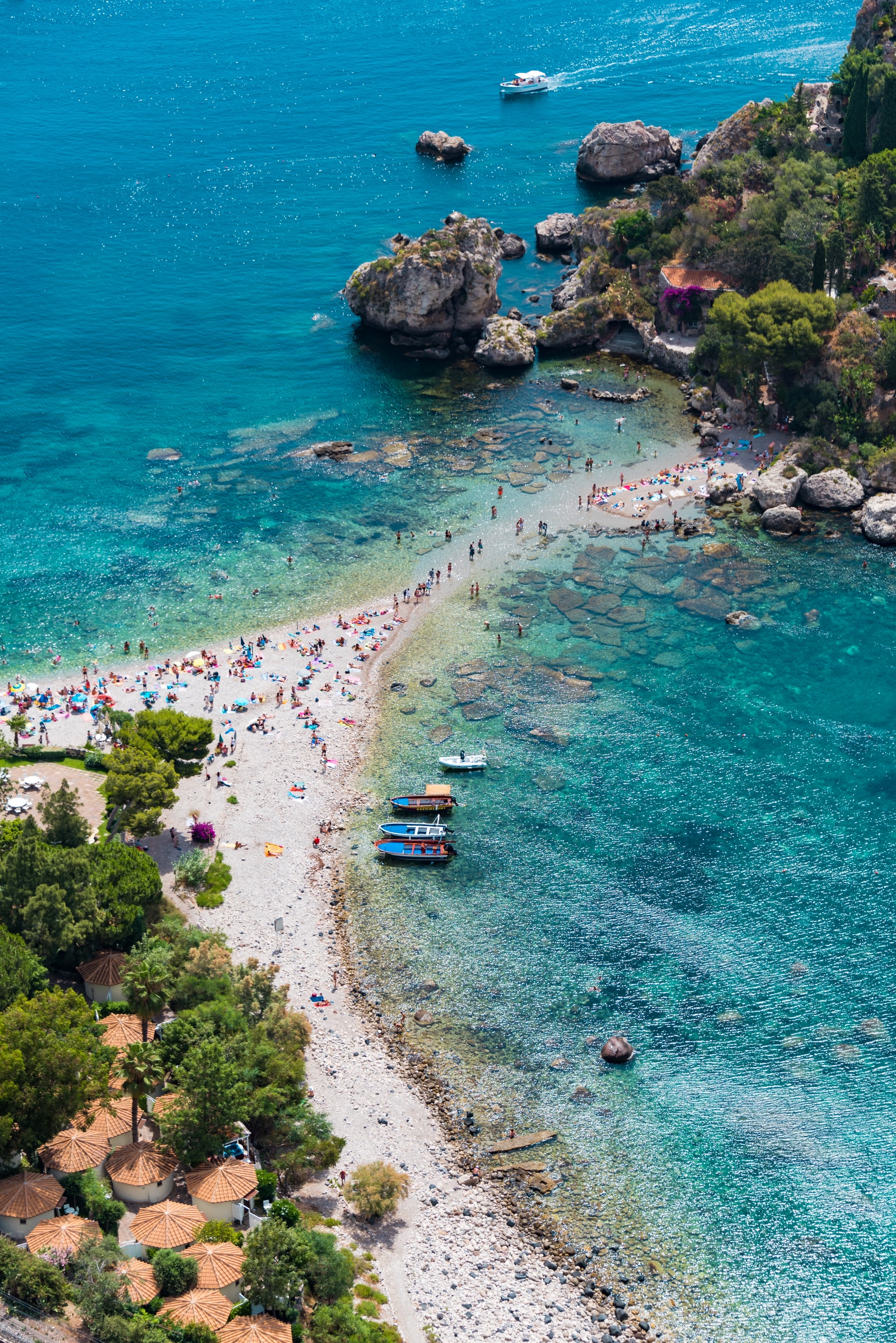
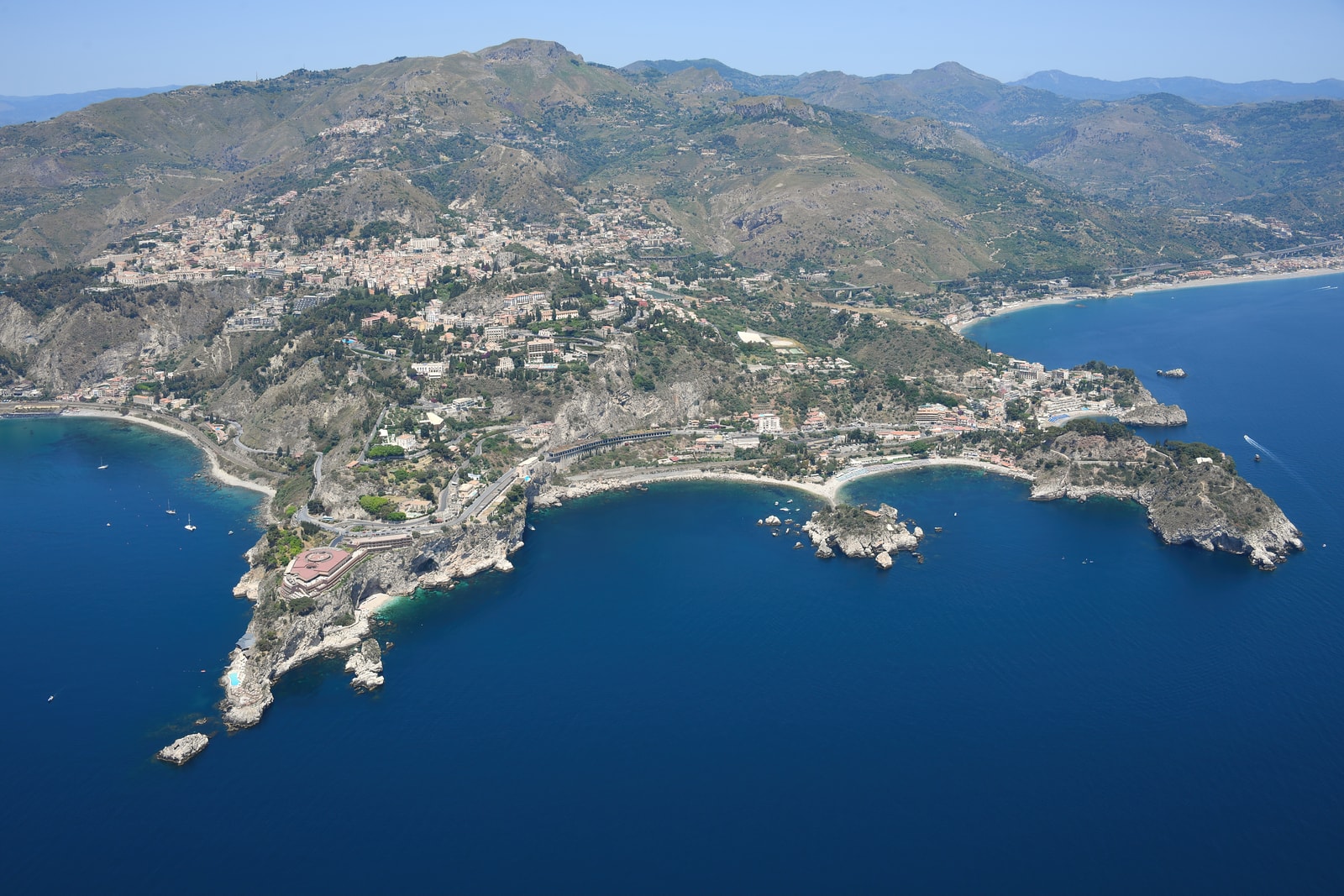
Near Taormina, the world-famous beaches of Isola Bella and Giardini Naxos are an easy and highly recommended day trip from Catania. Isola Bella, known as the "Pearl of the Ionian Sea," is a tiny, lush nature reserve connected to the mainland by a narrow pebble path that appears and disappears with the tide.
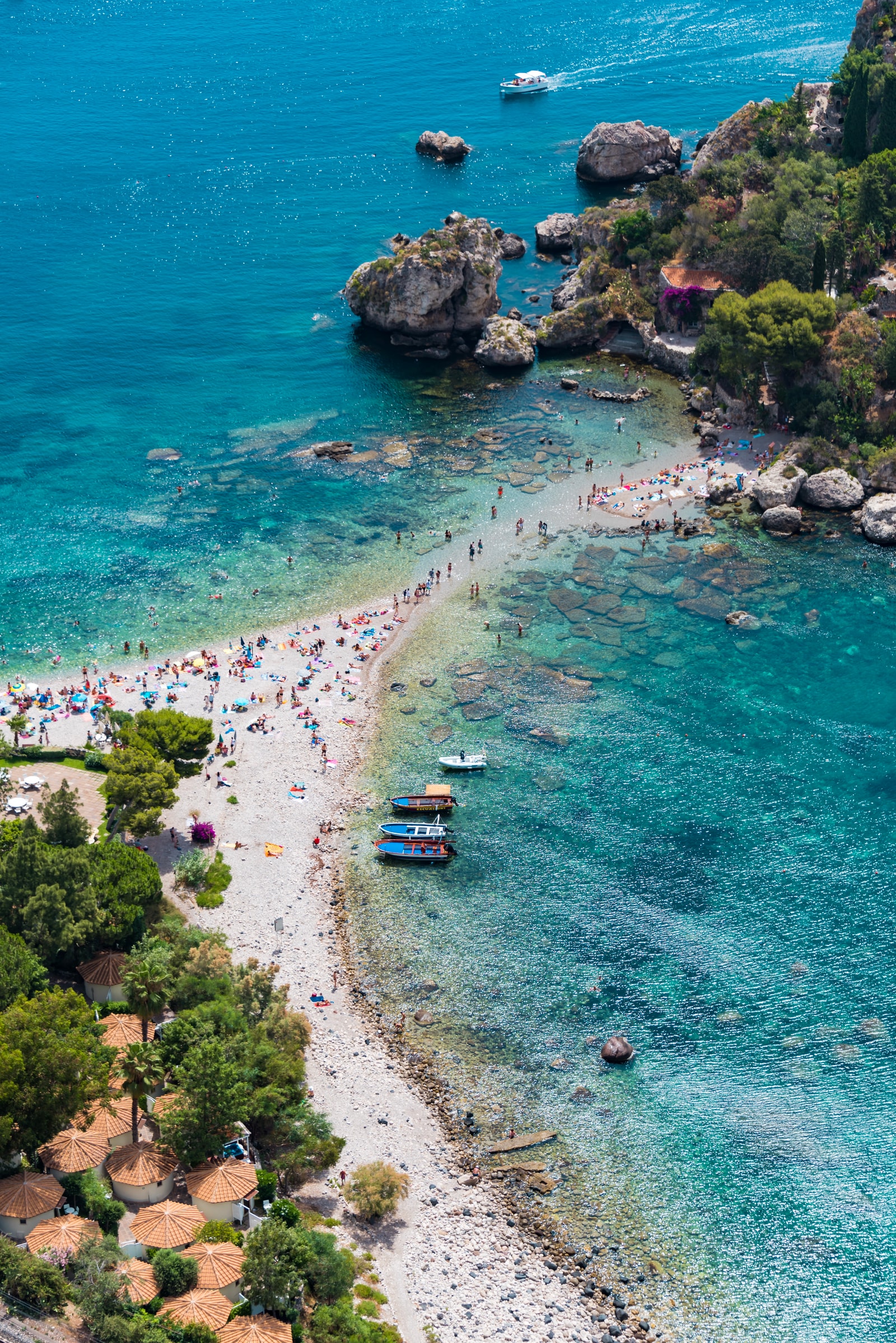
The island was restored and fully reopened to visitors on June 20, 2026. Its surrounding bays offer spectacular snorkeling in emerald-green water. Just south, Giardini Naxos spans a wide bay with family-friendly golden sand beaches like Schisò Beach.
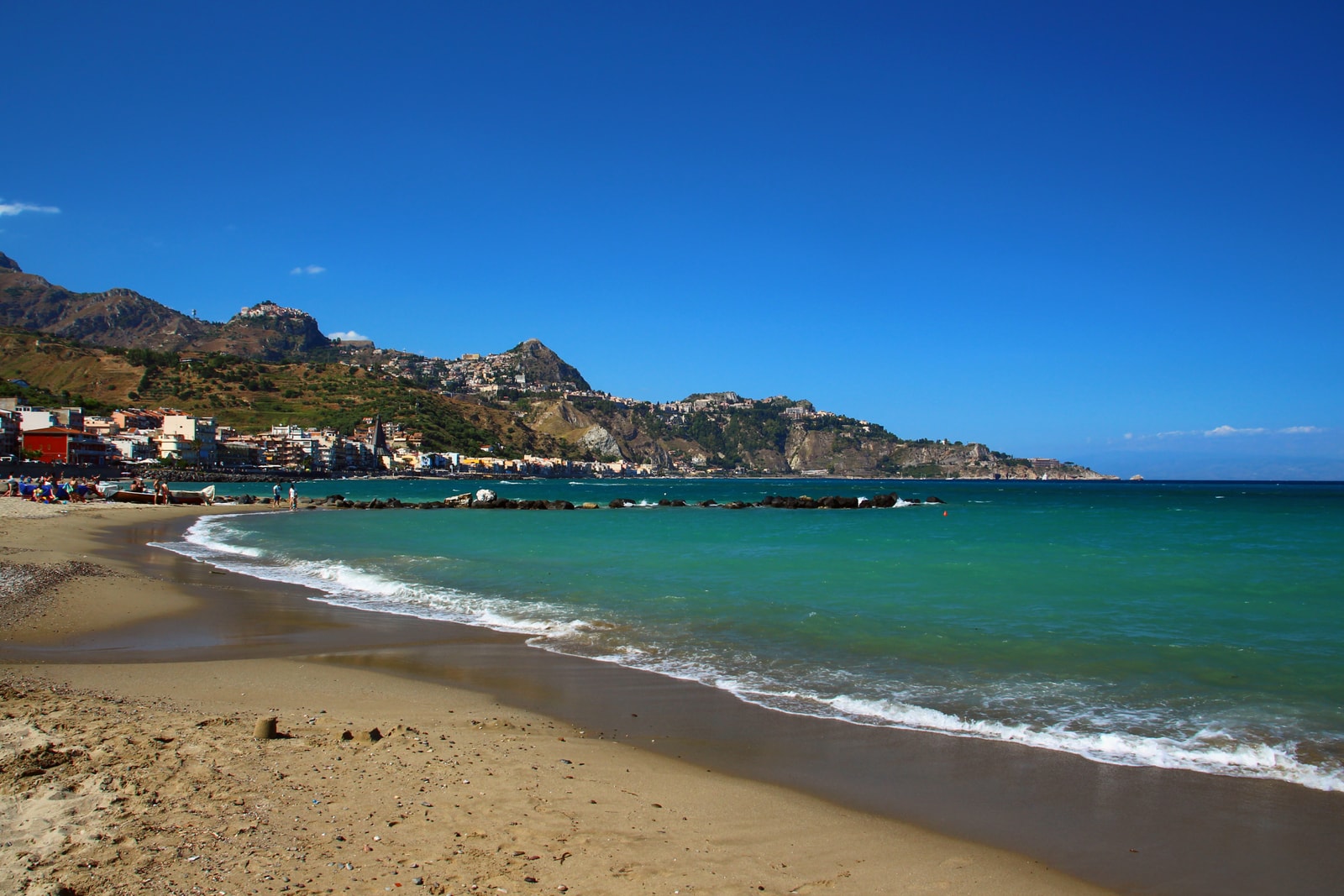
Naxos was also the first Greek colony in Sicily, and its history can be explored at the seaside Archaeological Park of Naxos. The best way to get there is by Interbus or Etna Trasporti coaches from Catania. To reach Isola Bella, take the bus to Taormina and then the Taormina-Mazzarò Cable Car down to the sea.
Northern Getaways: From Fondachello to Quiet Coves
For a more local Sicilian beach day, the coast north of Acireale offers several quieter options. Fondachello Beach in Mascali has a pebble beach where the clear water gets deep quickly, making it a favorite for serious swimmers. It also offers panoramic views of Mount Etna.
Other nearby hamlets offer authentic experiences:
- Pozzillo: A fishing village known for mineral springs that bubble up along its black lava coast.
- Stazzo: Features quiet coves and shallow rock pools that warm in the sun.
- Santa Tecla: Home to a unique shoreline of smooth, grey volcanic cobblestones.
Southern Retreats: Agnone Bagni and Oasi del Simeto
About 25 kilometers south of Catania, Agnone Bagni offers a sweeping crescent bay with dark-golden sand. The water is shallow for dozens of meters, making it ideal for families. It’s a quintessential Sicilian holiday village, defined by the summer tradition of villeggiatura, where it comes alive with local families.
Nearby, the Oasi del Simeto nature reserve protects the mouth of the Simeto River. This wild, non-commercialized area of dunes and salt marshes is a vital stop for migratory birds and a nesting site for loggerhead sea turtles. It's a place for quiet birdwatching and nature photography, not beach clubs.
Exploring the Ionian Sea: Snorkeling and Boat Tours
The underwater world around Catania is as dramatic as the coast itself. Snorkelers can spot parrotfish and octopuses among the volcanic rocks, while divers can explore basalt columns and submerged lava caves in the Isole Ciclopi Marine Protected Area.
Boat excursions departing from Catania or Aci Trezza offer a chance to swim and snorkel in secluded coves. These tours often include a Sicilian Aperitivo on board, with local cheeses, arancini, and Etna DOC wines, providing a perfect end to a day on the Ionian Sea.
Summer 2026 Events: Catania's Coastal Festivals
The coast comes alive in summer 2026 with a calendar of music, tradition, and celebration.
- Catania Summer Fest 2026 (June 25 - August 31, 2026): A city-wide program of concerts and performances, including rock nights at beach clubs.
- Festa di Maria Santissima della Catena (August 12-14, 2026): A traditional fishermen's feast in Aci Trezza with boat processions and fireworks over the sea stacks.
- Ferragosto Beach Celebrations (August 15, 2026): The peak of the Italian summer, celebrated with all-night parties, bonfires, and fireworks on the beaches of La Playa.
Beach Essentials for Sicily 2026: Safety and Etiquette
To make the most of your trip, keep a few local tips in mind. The most common jellyfish is the Mauve Stinger. If stung, rinse with seawater (never freshwater) and apply heat to neutralize the venom. Do not use vinegar, as it makes the sting worse.
During July and August, reserving a spot at a private lido is essential, especially on weekends. Expect to pay 15 to 40 EUR for an umbrella and two loungers. Always check the beach flag warning system: a red flag means danger or no lifeguard on duty.
Finally, be cautious with your belongings. On crowded free beaches, never leave valuables unattended. When parking, never leave anything visible in your rental car and use guarded lots whenever possible.
Gallery