Las Canteras Beach: Your December 2026 Guide
Swim, surf and explore Las Palmas’ city beach in December 2026.
Published on 20 Nov 2026 14:57 GMT

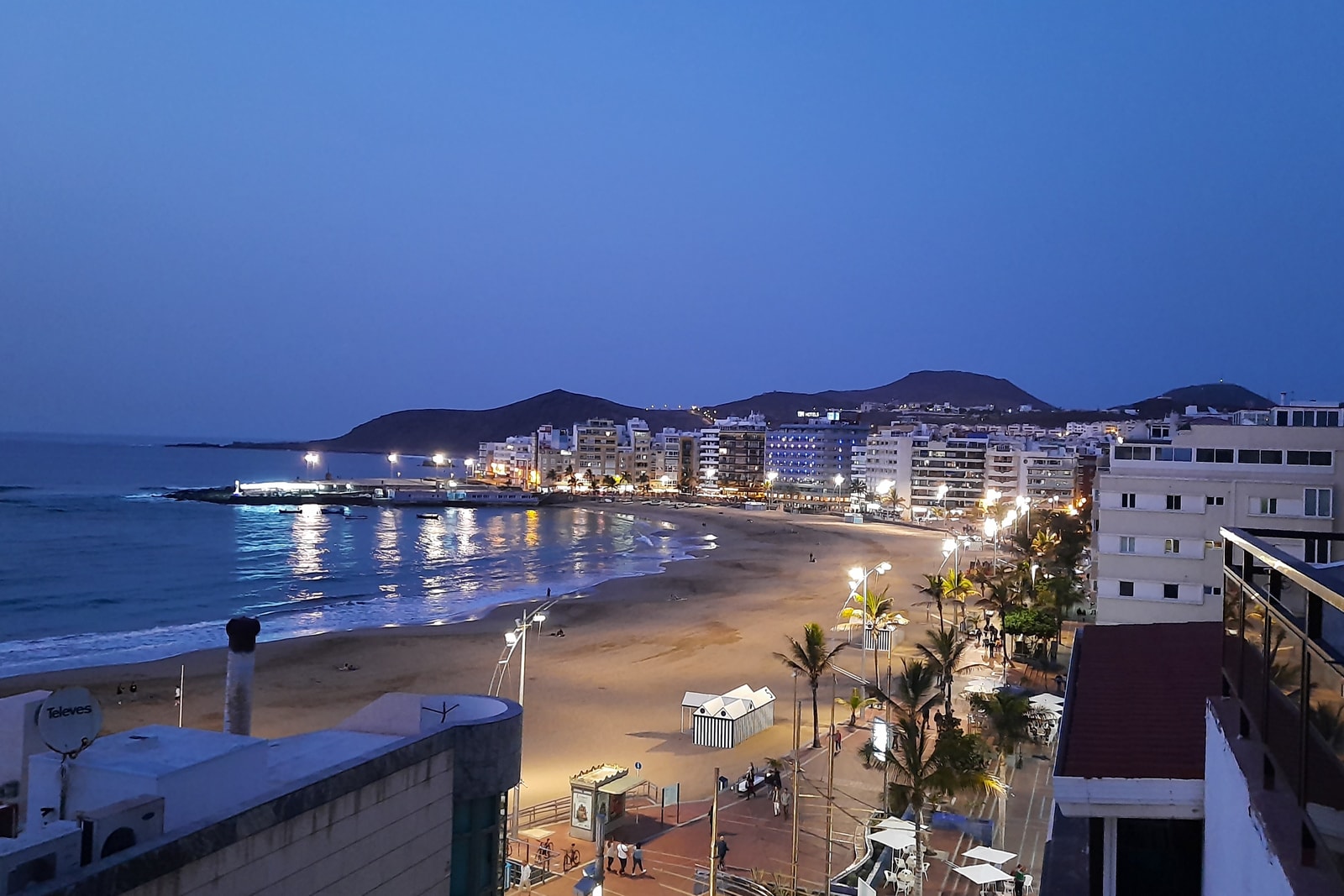
Waves break on a reef offshore, yet the water closer to the sand can look remarkably calm. That contrast is the key to Las Canteras Beach, the roughly three-kilometre urban shoreline of Las Palmas de Gran Canaria. Follow it from La Puntilla in the north to La Cícer in the south and you’ll find fishing boats, sheltered bathing and open Atlantic surf—all on the same beach.
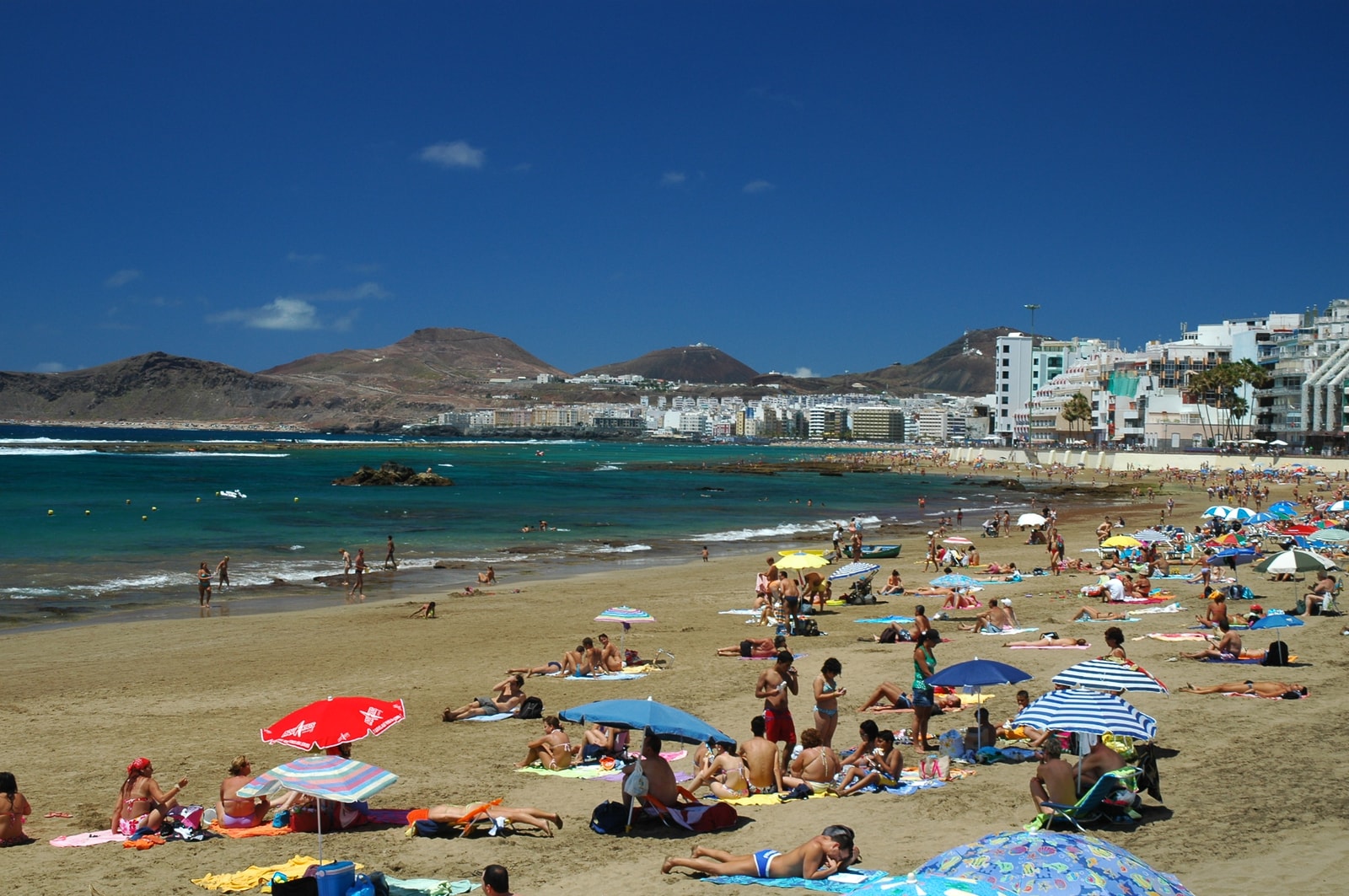
The reef is called La Barra. It is a natural rocky formation, not a seawall or a tropical coral reef, and it runs roughly parallel to much of the shore. On a settled day it softens incoming waves and helps make the inner bay comparatively gentle. It also helps explain why swimmers gather in the middle while surfers head south.
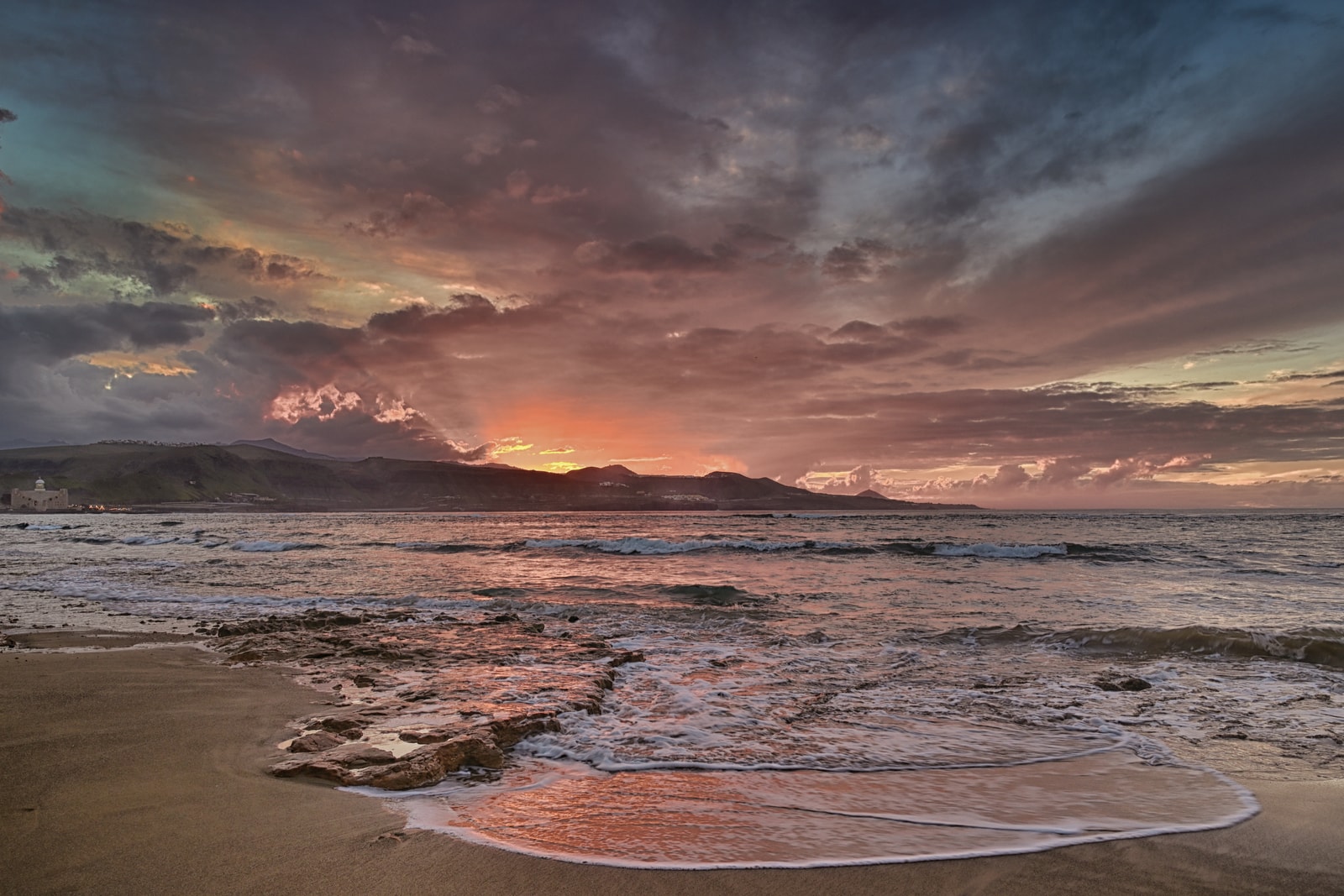
Look again when the tide changes. At lower water, sections of rock emerge; as the tide rises, water can pass over the reef. Waves and currents also move through its gaps, particularly when the Atlantic swell is substantial. The sheltered bay is still part of the ocean, and its conditions vary along the beach and throughout the day.
December brings mild weather, cooler water and the possibility of stronger winter swell. The Las Canteras beach guide is a useful introduction to the shore, but the best choice of stretch depends on what the sea is doing when you arrive.
La Puntilla: Fishing and Canarian Food
Start at La Puntilla, where boats on the sand and seafood restaurants give the northern end a neighbourhood-scale maritime character. The nearby Mercado del Puerto adds another reason to linger. This is the fishing side of the beach, distinct from the city’s major commercial harbour, Puerto de la Luz, farther east.
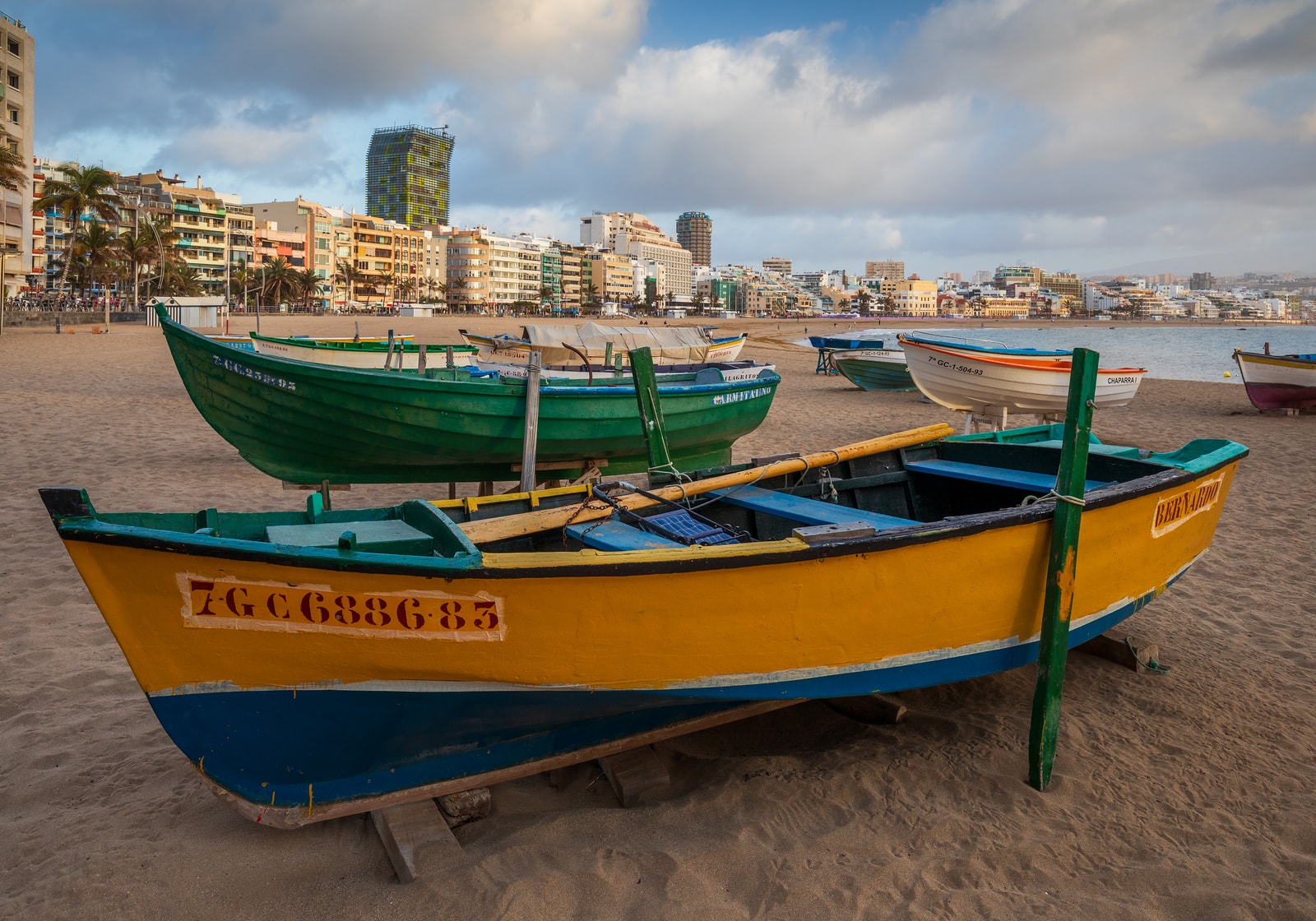
The distinction matters at lunch, too. Canarian cooking and locally caught fish are not necessarily the same thing: a kitchen can prepare a dish in a local style using fish from a wider supply chain. If provenance is important to you, ask where the fish was caught rather than relying on the name of the dish.
Look for grilled vieja, a reef fish often cooked simply, or papas arrugadas: small, salt-boiled potatoes served with mojo sauce. Gofio escaldado, made by mixing toasted grain flour with hot fish stock, offers a different, deeply savoury taste of the islands. What appears on a menu will vary.
Mercado del Puerto is a food stop, with stalls and places to eat, rather than a fish auction. A meal here can be a leisurely beginning to the walk south—or the reward for having completed it in the other direction.
Playa Grande and Playa Chica: The Sheltered Middle
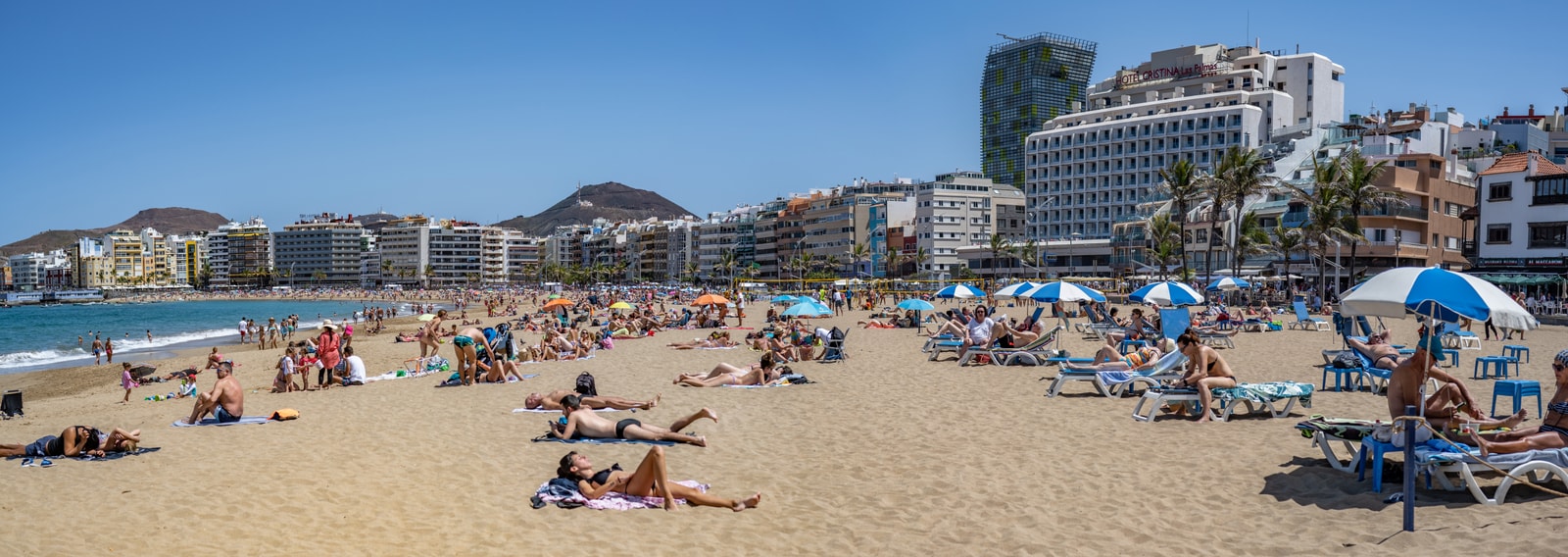
South of La Puntilla, the beach opens into Playa Grande, a broad sweep of sand backed by a busy promenade. Farther along, Peña la Vieja and the smaller pocket of Playa Chica offer useful landmarks. This is the natural place to begin if your idea of Las Canteras involves a towel, a swim and lunch within easy reach.
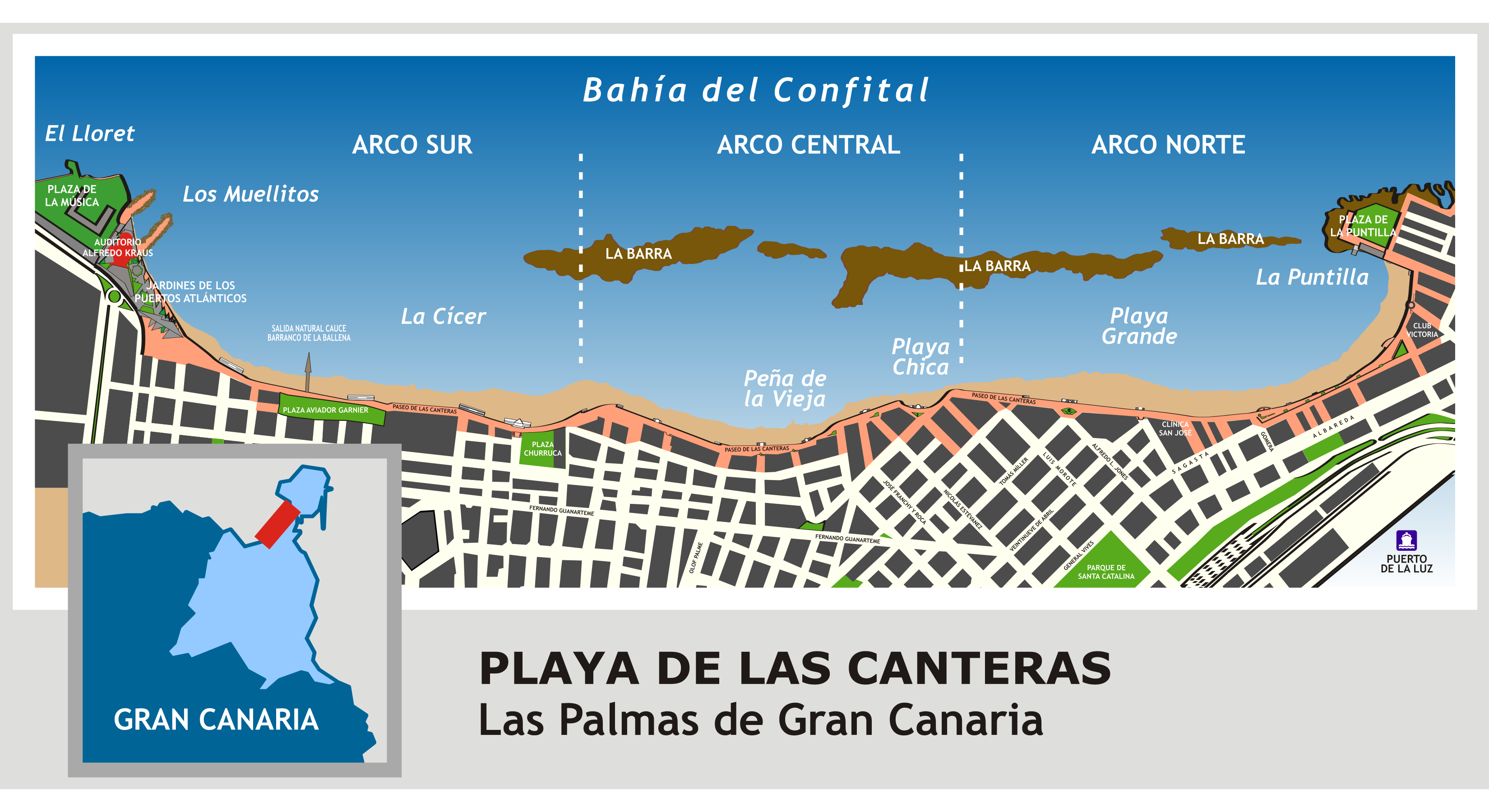
La Barra takes some energy out of the waves here, which is why the central beach often feels gentler than La Cícer. In settled, clear conditions, snorkelling can be appealing, too. Visibility changes with wind and swell, however, and even Playa Chica’s sheltered pocket responds to the tide.
Lower water reveals more rock and intertidal pools; rising water changes the depth and can carry waves farther across the reef. The pools are living habitats, not miniature aquariums to rearrange. Watch without lifting or disturbing animals, and avoid trampling the seagrass that grows in parts of the bay. There is plenty to notice from shore without walking out onto La Barra.
La Cícer: Surf at the Open End
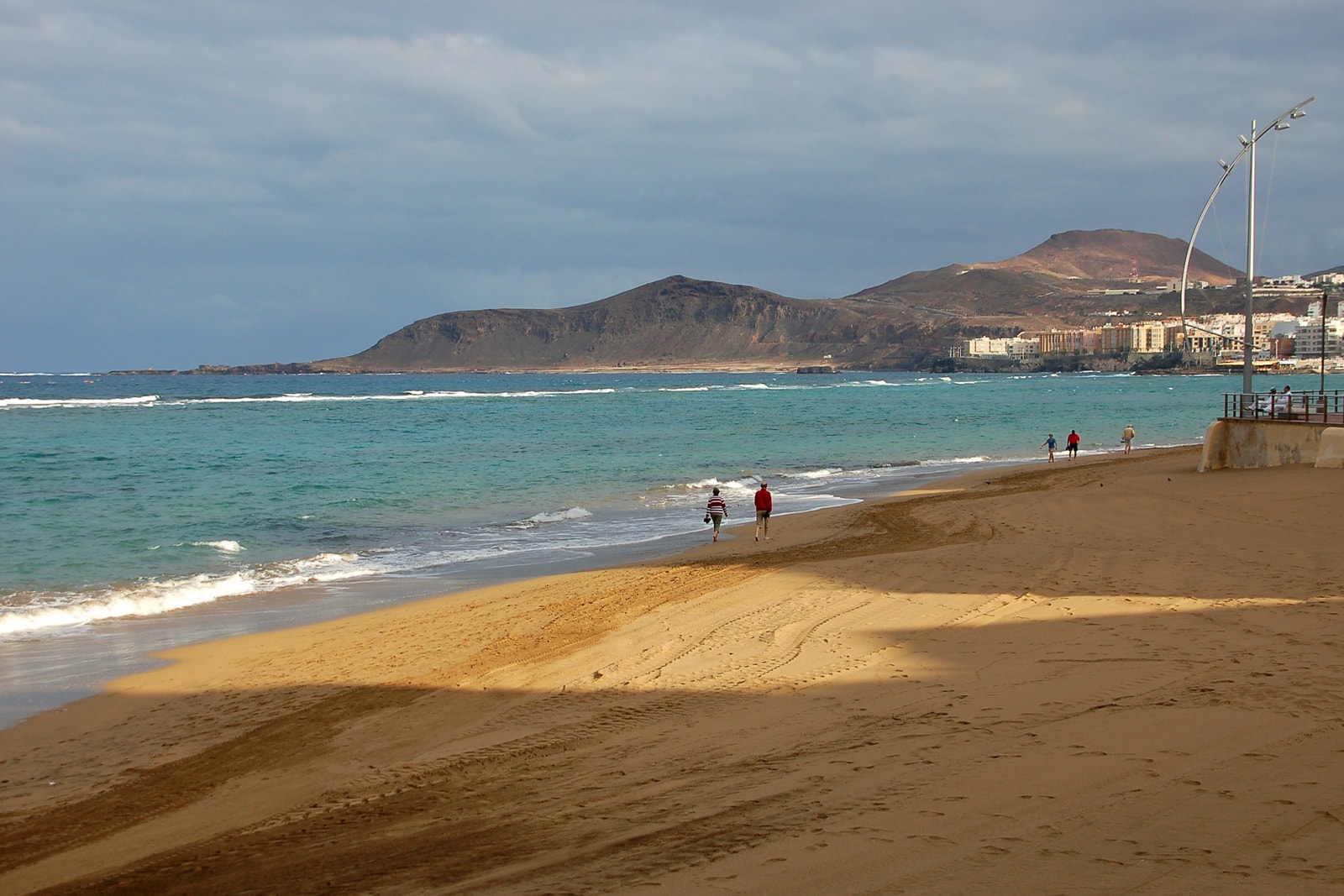
At La Cícer, the Atlantic has a louder voice. The southern end of Las Canteras is more exposed, with darker sand, surf schools and waves near the Auditorio Alfredo Kraus. Winter often brings more consistent or powerful swell, making this the stretch most closely associated with surfing.
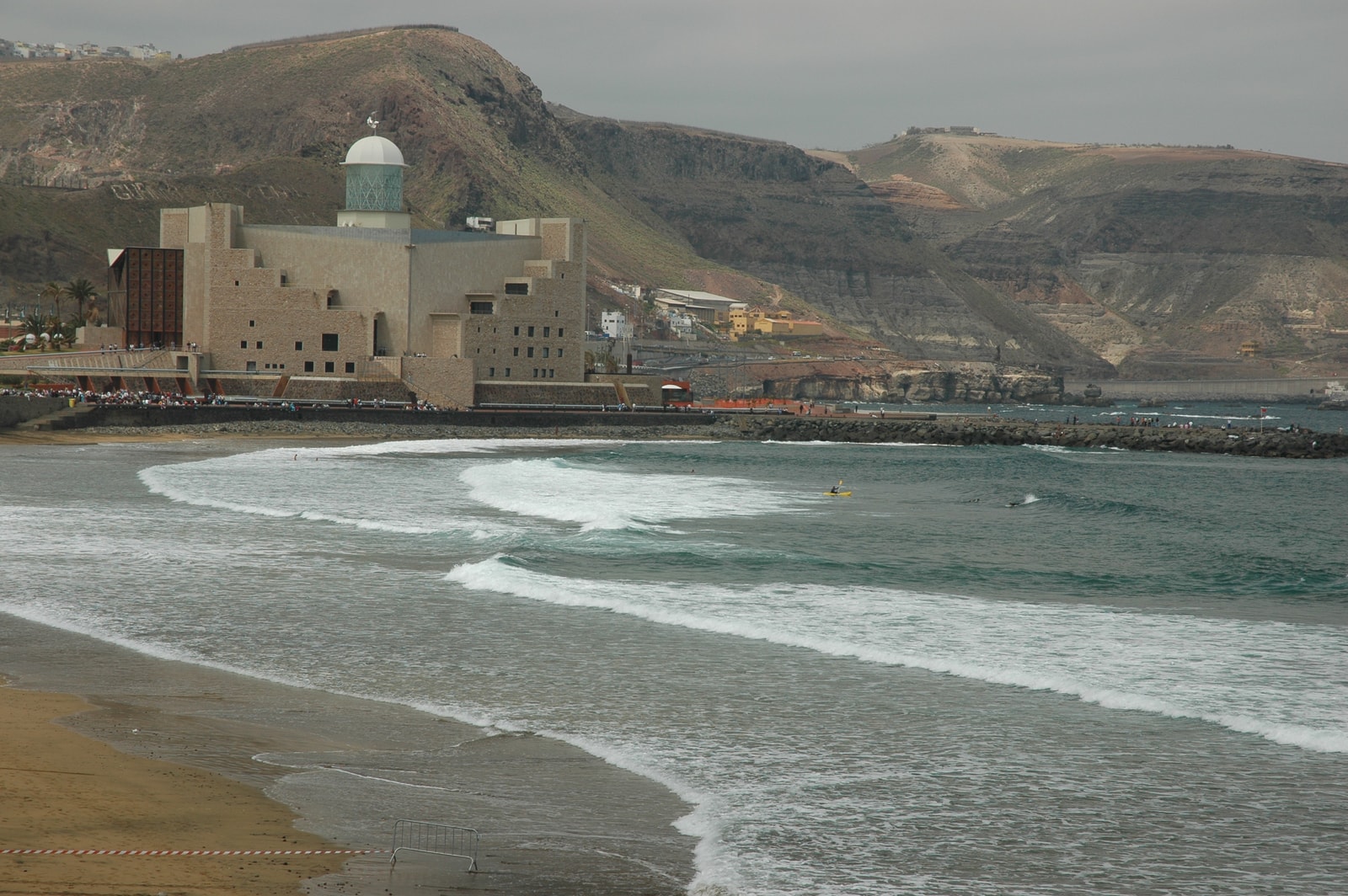
It is also the clearest demonstration of what La Barra does elsewhere. In the centre, the reef reduces wave energy across much of the bay; at the southern opening, less shelter means more of that energy reaches the beach. A look north and south can reveal two very different seas within one waterfront.
La Cícer has a shifting sandy beach break, so the shape and quality of the waves change as sandbanks move. Surfers, bodyboarders and lessons share the shore, with residents and visitors both part of the scene. On smaller days the surf may be approachable; larger swell can make getting out and catching waves much more demanding.
Beginners should ask an instructor which area suits the day’s conditions rather than choosing a wave by appearance. Swimmers and surfers should respect marked zones and lifeguard directions. The central bay is often calmer, but neither end can be judged safely by its reputation alone.
Las Canteras Promenade and the City’s Story
The promenade feels inseparable from the city now, but Las Canteras was once a more peripheral shore. The growth of Puerto de la Luz helped draw Las Palmas northward, bringing residents and businesses closer to the beach. Paths and paved waterfront stretches developed gradually, creating a route that became a destination in its own right.
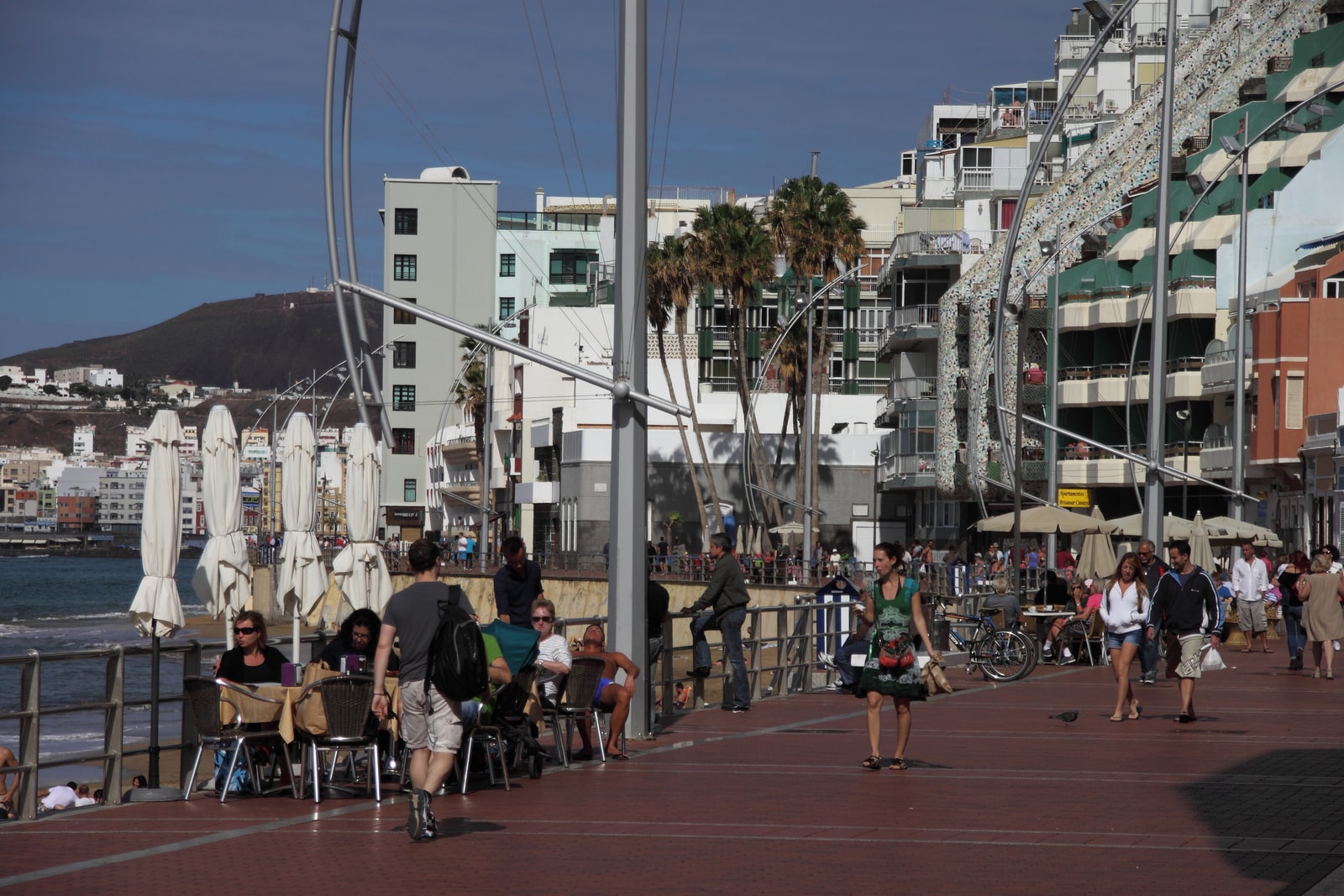
As the city grew, cafés, shops and meeting places came to face the water. The result is more than a scenic strip behind the sand: it is a public space where a visitor’s beach walk crosses paths with ordinary routines. People come for a swim, a conversation, a meal or simply a look at the sea. The beach is a city amenity as well as a holiday attraction.
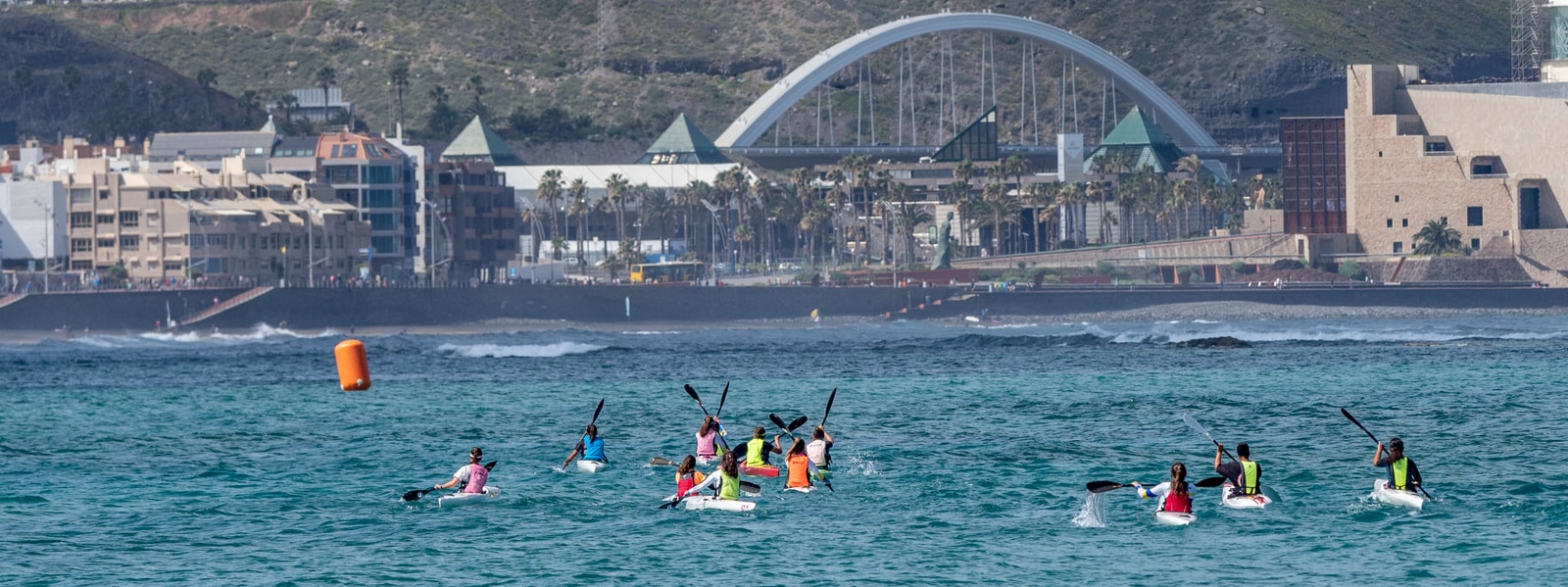
At La Cícer, the shoreline tells a particularly compact story of change. An electricity plant stood here from the late 1920s; the Auditorio Alfredo Kraus, inaugurated in 1997, later became the area’s prominent civic and cultural landmark. Industry and the cultural life of the city are different chapters in the history of the same southern end.
Allow roughly 40–60 minutes to walk the full beach without long stops. The more interesting option is to take longer: the promenade links the zones, but the boats, bathing areas and surf give each stretch a reason to pause.
Beyond the Beach: Las Palmas and December 2026 Events
A short walk inland from the northern and central beach, Santa Catalina Park is a handy meeting point and a glimpse of the city beyond the waterfront. Beside it, the Elder Museum of Science and Technology offers hands-on indoor exhibits—a useful change of pace on a cloudy or breezy day. Historic Vegueta lies farther south and works better as a separate excursion than as an extension of the seafront walk.
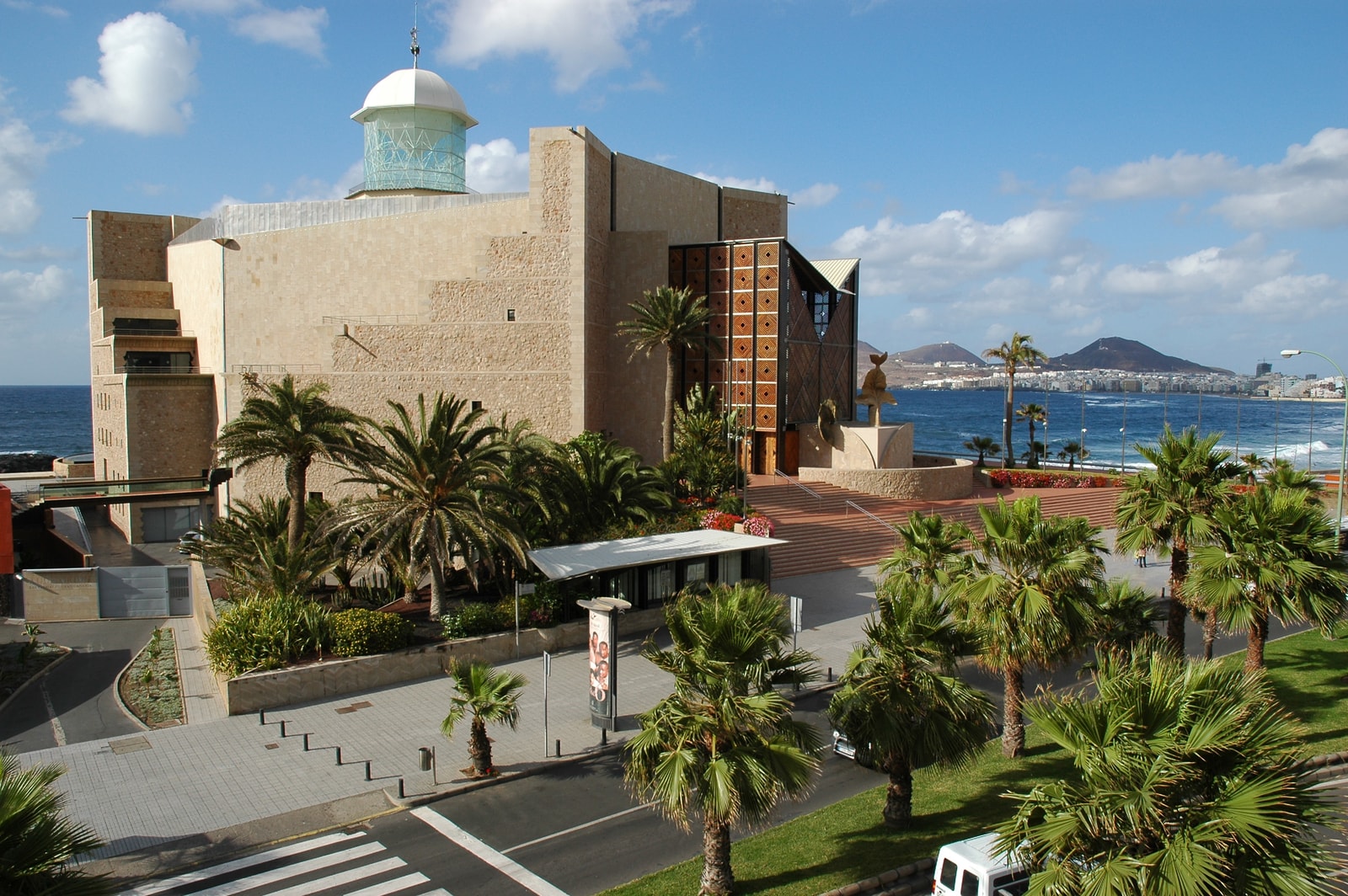
The auditorium at La Cícer also makes it possible to pair a December beach day with an evening performance. Its programme includes opera, gospel, workshops and an orchestral benefit concert:
- Chichon dirige Tosca (4 December 2026): Puccini’s complete opera in concert with the Orquesta Filarmónica de Gran Canaria.
- The New Orleans Gospel Choir: Streets of New Orleans (12 December 2026): a performance in the Gospel Canarias Fest programme.
- Te Toca. Moving Concerts (12–13 December 2026): music workshops at the auditorium.
- Orquesta Filarmónica de Gran Canaria’s 2026 Christmas Benefit Concert (18 December 2026): the orchestra’s seasonal benefit performance.
One familiar seasonal attraction will be missing from the sand: local outlets reported that the 2026/27 Belén de Arena (Date: NA), the beach’s Christmas sand nativity, was cancelled. The auditorium programme offers a different way to bring the city’s December cultural life into a day by the Atlantic.
Planning a December Visit to Las Canteras
Choose your stretch first, then check the sea and services for that particular area. December is generally mild, but passing showers, wind and swell can change the feel of the beach; winter does not necessarily mean an empty shore. A comfortable promenade walk and a suitable swimming day are two different decisions.

- Swimming: Check flags and notices for your chosen section, and ask a lifeguard if unsure. Green permits bathing, though hazards can still be present; yellow calls for caution and observance of posted restrictions; red means do not bathe. Lifeguard coverage varies. Choose a clear sandy entry, keep children within arm’s reach, and stay clear of surf, reef openings and exposed rocks. Do not swim or walk out to La Barra. Tide tables help with orientation, but they cannot tell you whether the water is safe.
- Getting there: City and intercity buses connect the area, and Santa Catalina is a useful approach for the northern or central beach. Walking and taxis are alternatives; parking close to the seafront can be limited.
- Facilities and access: Toilets, showers and changing facilities are distributed unevenly, and not all may be operating. Some access points have adapted routes and assisted bathing, but locations and availability vary. Check municipal beach information before depending on a particular service.
- On the sand: Bring sun protection, water and a light layer for the breeze. Respect reef life and keep an eye on belongings. Then settle on the Las Canteras day you want: sheltered bathing when conditions allow, a fishing-quarter meal or the surf at La Cícer.
Gallery